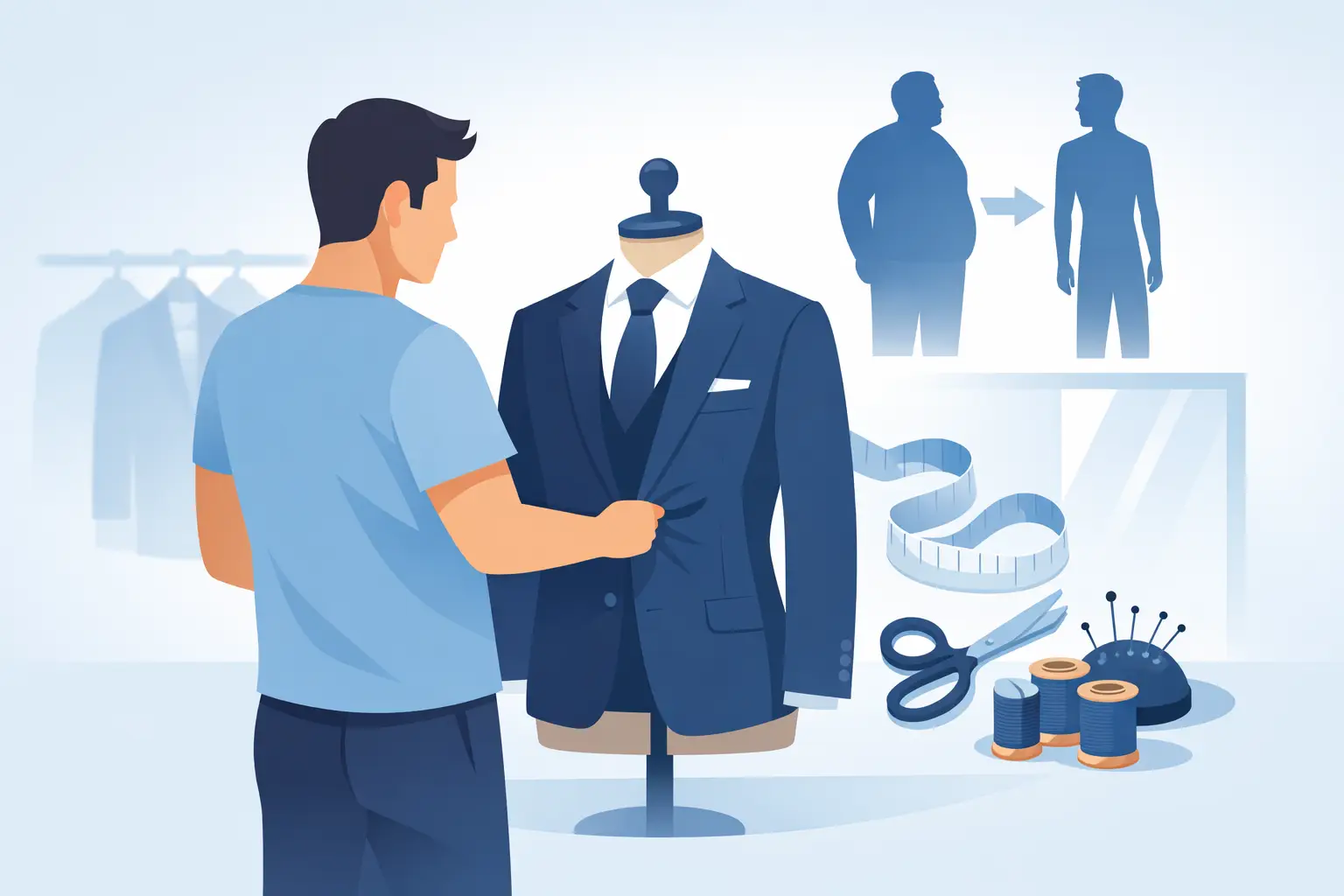
You put on a suit that once felt exacting and clean through the shoulder, waist and seat, and suddenly it hangs differently. The jacket collapses at the back, the trousers need a belt to stay up, and the sharp line you invested in has softened. So, can a suit be altered after weight loss? In many cases, yes – and often very successfully – but the quality of the result depends on how the suit was made, how much weight you have lost, and where that weight has come off.
A well-cut suit is never just smaller fabric wrapped around the body. It is balance, suppression, drape and proportion working together. Once your shape changes, the question is not simply whether the garment can be taken in. It is whether it can be recut in a way that restores elegance rather than merely reducing excess cloth.
Can a suit be altered after weight loss and still look sharp?
Often, yes. A skilled tailor can usually refine the waist of the jacket, suppress the back, reduce the seat and thigh of the trousers, and adjust the waist to bring the suit back into harmony with your frame. If the original suit had enough seam allowance and sound construction, the finished result can feel remarkably close to a fresh commission.
That said, there is a threshold. If the suit is only slightly too large – perhaps after losing half a stone to a stone – alterations are typically straightforward. If you have lost significantly more, the conversation becomes more technical. The chest, shoulder line, armhole position and overall balance may all need attention, and some of those areas are far less forgiving than the waist.
The distinction matters because good tailoring is visual as much as physical. You may be able to make a jacket smaller on paper, but if the lapels begin to look too wide for your new build, or the pocket position drops visually too low, the suit can appear altered rather than naturally cut for you.
What a tailor can usually alter
The jacket is often the most complex part, but there is still considerable room to improve fit after weight loss. Taking in the waist is generally the first and most effective adjustment. This restores shape through the middle and prevents the coat from looking boxy. The back seams can also be refined to remove fullness that causes rippling below the collar or through the lower back.
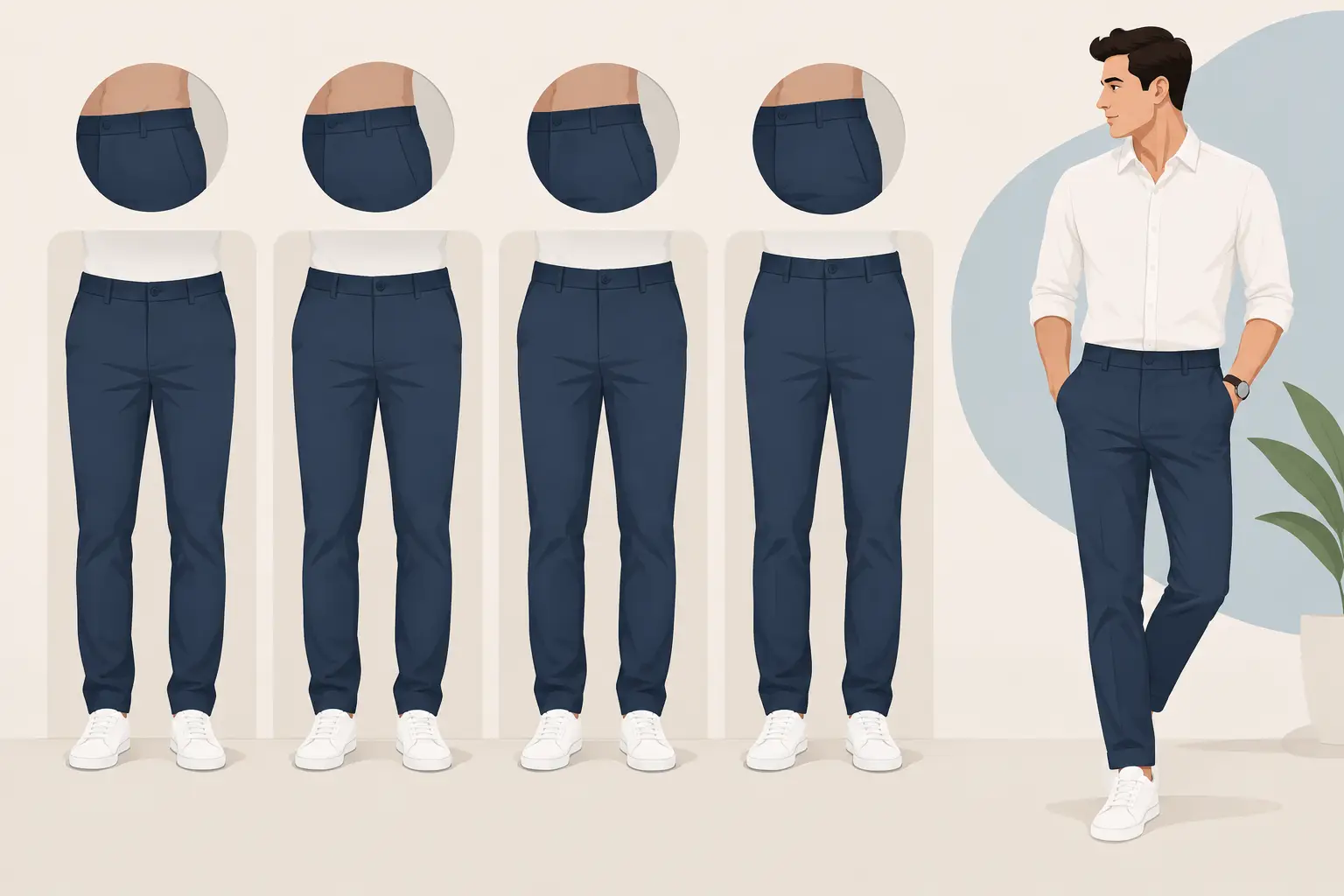
Trousers are usually more accommodating. A tailor can reduce the waist, seat and leg line, and tidy excess cloth through the thigh. If the trousers have become too long because they now sit lower on the body, the hem can be corrected to restore a clean break. This is especially important in business and formal tailoring, where trouser line does much of the quiet work.
Sleeves can also be narrowed if they have started to look loose. In some cases, the body of the coat can be shortened slightly to suit a leaner silhouette, though this depends on button placement, pocket position and the original design.
Where alterations become difficult
The shoulders are the decisive point. If the shoulder width is now noticeably too broad, or the sleeve head no longer sits correctly because your upper body has changed substantially, the jacket may require major reconstruction. Shoulder alterations are possible, but they are labour-intensive and only worthwhile when the suit itself justifies that level of work.
The chest can also be problematic. A canvas jacket is shaped internally as well as externally, so reducing volume through the front is not as simple as pinching in side seams. If there is too much extra cloth across the chest, the jacket can lose its intended drape. The same applies to the armholes. A lower or oversized armhole after weight loss can make the whole garment look less refined, even if other areas have been corrected.
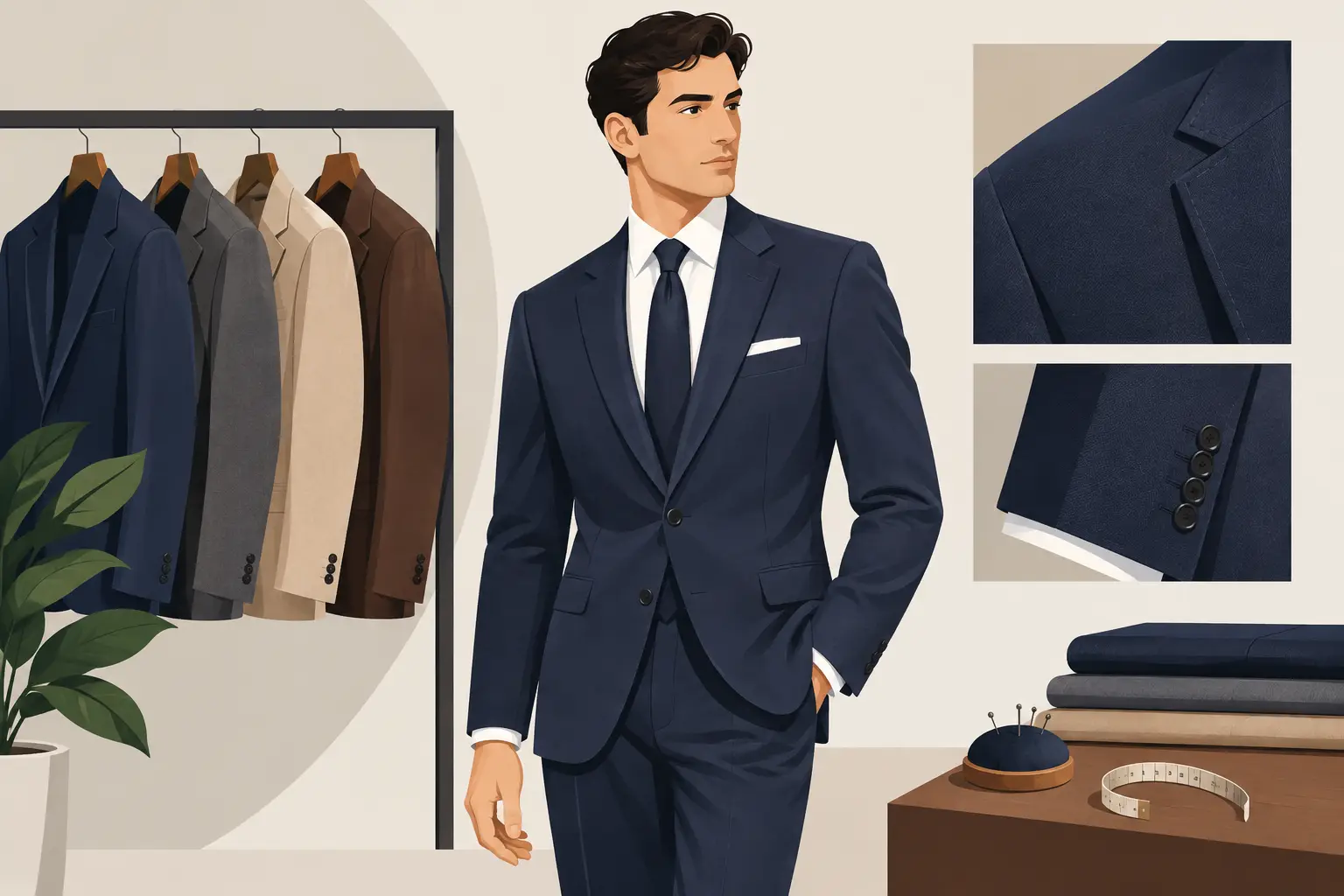
There is also the issue of scale. If a fuller-cut suit is aggressively slimmed down, the original proportions may remain. Wider lapels, lower button stance and larger pockets can all read as slightly oversized on a much leaner body. The garment may fit, but it may not flatter in the way it once did.
How suit construction affects the outcome
Not all suits respond to alteration in the same way. A well-made garment with proper canvassing, generous seam allowance and thoughtful internal finishing gives a tailor more to work with. Better construction tends to hold its shape during recutting, and individual sections can be adjusted with greater precision.
Fused or cheaply manufactured suits can be more limiting. Excessive heat and pressing during alterations may disturb bonded fronts, and there is often less internal allowance to reshape cleanly. This does not mean such a suit cannot be improved, only that the ceiling is lower.
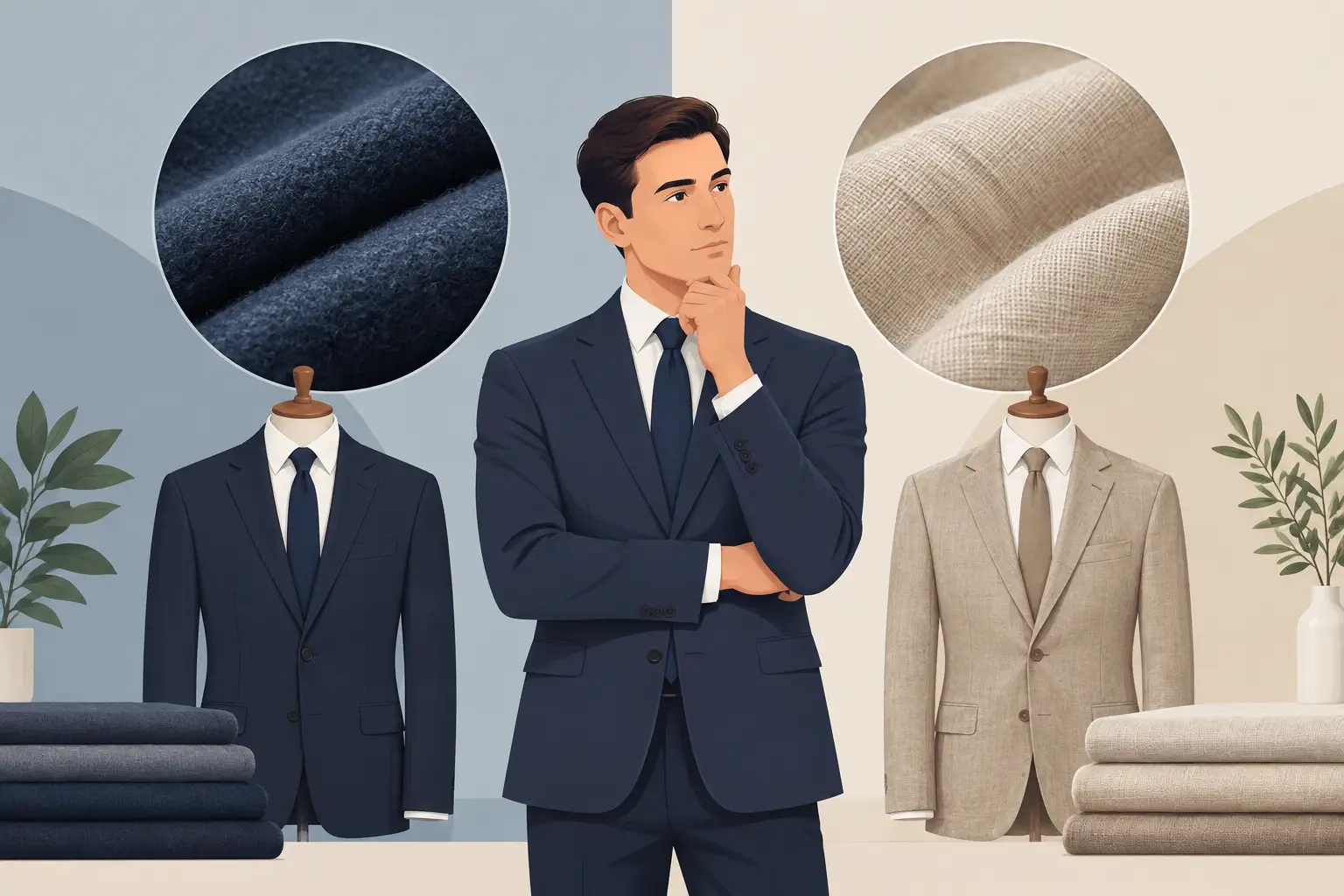
Cloth matters too. Heavier worsteds, flannels and tweeds often alter beautifully because they carry structure and disguise minor intervention. Lightweight summer cloths, delicate blends and highly patterned fabrics demand more caution. A pronounced check, for example, must be realigned carefully when seams are taken in, otherwise the suit can quickly lose its composure.
When it is worth altering, and when it is better to start again
If the suit is of strong quality, fits reasonably well in the shoulders, and your weight loss is stable, alterations are usually a sound investment. This is especially true for a business suit you rely on regularly, a dinner jacket, or a wedding suit with sentimental value. There is real merit in preserving a garment that was already cut from excellent cloth and made with care.
If, however, you are midway through a larger transformation, patience may serve you better. Altering a suit too early can mean paying twice – once to bring it in now, and again to recut it in a few months. It is usually wiser to wait until your body has settled into its new proportions.
There are also moments when commissioning a new garment is simply the more elegant decision. If the jacket is now too broad through shoulder and chest, the trousers have lost their line beyond sensible correction, and your style preferences have evolved along with your shape, a new suit will almost always look superior to a heavily altered one. The goal is not to rescue fabric at all costs. It is to maintain sartorial sophistication.
What to expect at a proper alteration fitting
A serious alteration begins with assessment, not promises. Your tailor should study the garment on your body, not just measure it on a table. Weight loss affects posture, stance and balance as much as circumference. You may now stand differently in the coat. Your seat may have flattened, your chest may sit higher, your waistline may have shifted.
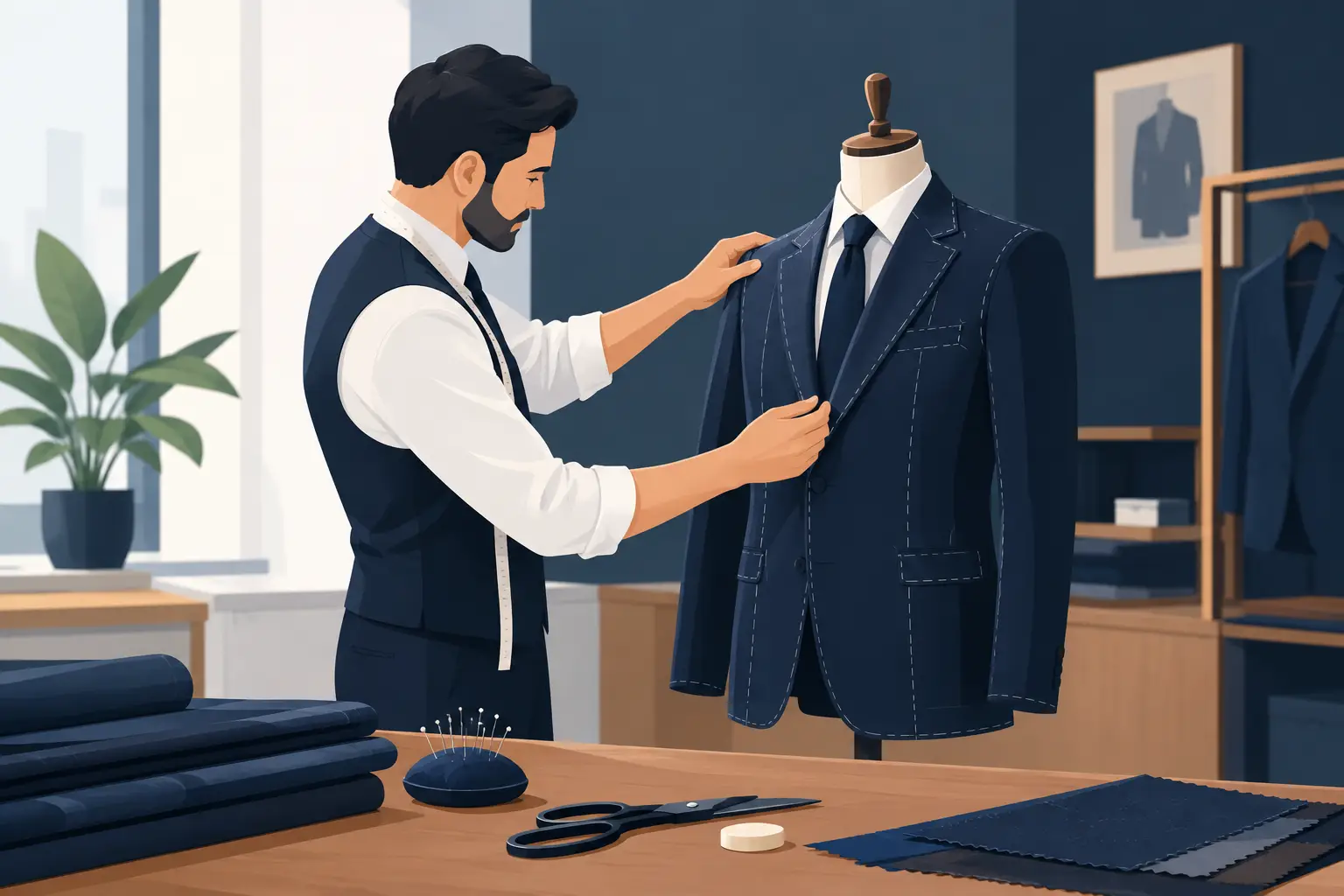
At the fitting, expect the tailor to pin several areas at once and explain what each adjustment will achieve. On a jacket, that may include waist suppression, back reduction, sleeve refinement and collar correction. On trousers, it may involve resetting the waistband, trimming the seat and refining the taper through the leg.
This is also the moment for honesty. A good tailor will tell you if the suit can be improved but not perfected, or if one piece is worth altering while the other is not. That candour is part of the service. Precision matters more than optimism.
Can a suit be altered after weight loss for weddings, work and black tie?
Yes, but the standard should rise with the occasion. For daily business wear, a very good alteration can return polish and authority without the need for a full replacement. For wedding attire or black tie, where photography and close scrutiny are part of the day, the margin for compromise is smaller.
If the suit carries emotional significance – perhaps it is your wedding suit ahead of an anniversary event, or a dinner jacket you wear for key formal engagements – expert alteration is often the right route. But for a major life occasion, the garment should do more than merely fit. It should feel intentional, balanced and quietly commanding.
That is where a tailoring house with both alteration expertise and bespoke understanding has an advantage. At Manndiip, for instance, the judgement is not limited to what can be taken in. It is centred on whether the final silhouette will still express the elegance and precision the garment ought to carry.
A suit should follow your shape, not remind you of the one you had before. If your body has changed, the right alteration can restore that sense of authority with surprising finesse. And if it cannot, that is not a failure of tailoring – it is a sign that your next suit should be cut for the man you are now.