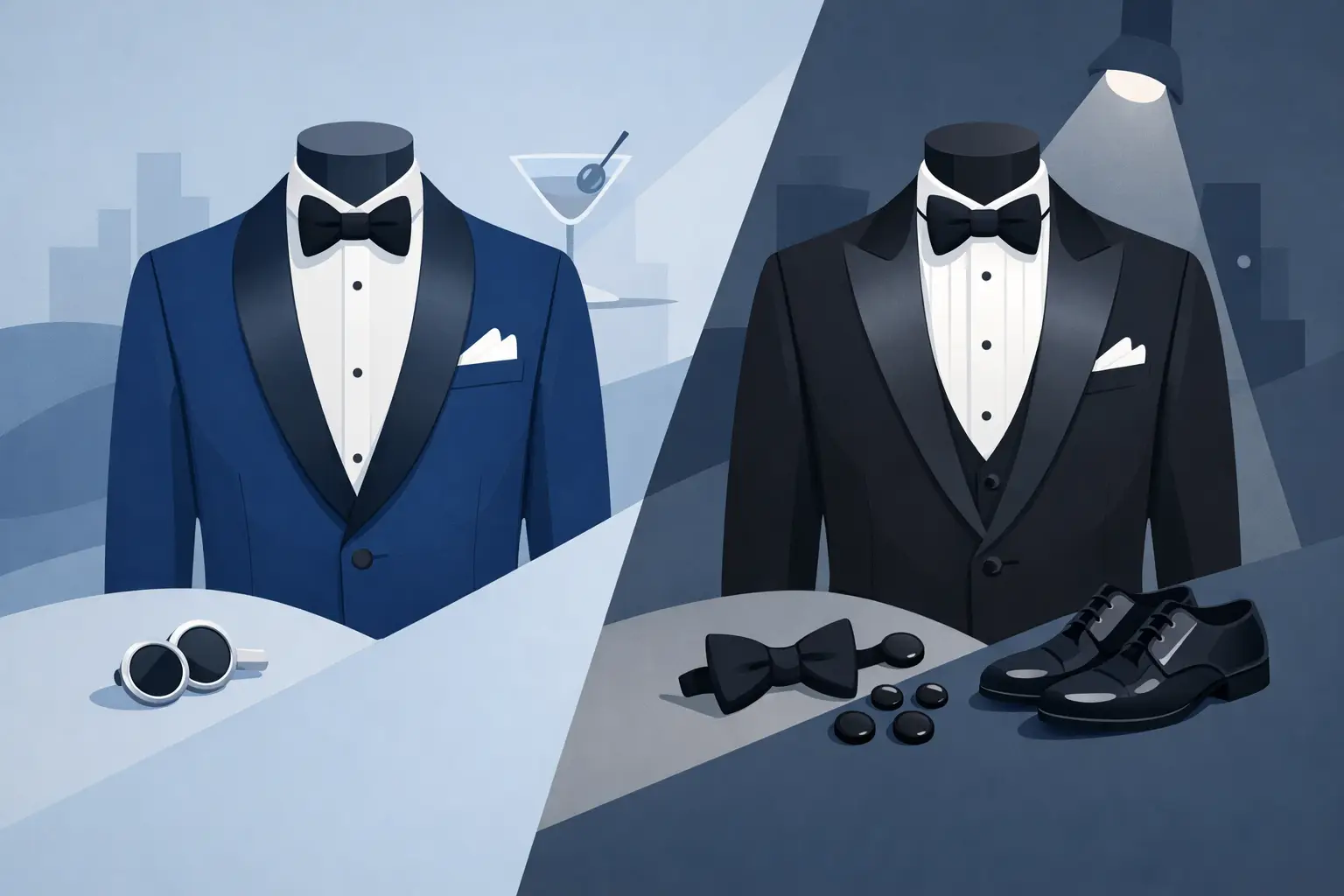
If you have ever stood in front of a formalwear rail wondering whether a dinner jacket and a tuxedo jacket are actually different, the short answer is this: usually, no. In the dinner jacket vs tuxedo jacket debate, the real distinction is more often linguistic than sartorial. In Britain, we say dinner jacket. In the United States, they tend to say tuxedo jacket or simply tux jacket. Yet, as with most things in tailoring, the finer details matter.
For a man building a serious wardrobe, terminology is not trivia. It shapes what you ask for, what you buy, and whether you arrive correctly dressed for a black tie event. Knowing the difference also helps you spot when formalwear is being diluted into something fashion-led rather than properly considered.
Dinner jacket vs tuxedo jacket: is there a real difference?
Strictly speaking, a dinner jacket is the tailored evening jacket worn as part of black tie. Its traditional companions are matching formal trousers, a dress shirt, black bow tie, and evening shoes. A tuxedo jacket refers to the same garment in American usage.
So if a British tailor says dinner jacket and an American retailer says tuxedo jacket, both are usually describing the same piece: an evening jacket distinguished from a lounge suit jacket by its satin or grosgrain facings, more refined cloth choices, and a silhouette designed for formal occasions after six o’clock.
Where confusion starts is in the way modern brands use the term tuxedo. Some apply it loosely to any dark formal suit with shiny lapels, even when the cut, cloth, or styling is not quite correct. Others sell separate tuxedo jackets intended for fashion events rather than proper black tie. That is why a gentleman should look past the label and examine the construction.
What defines a true dinner jacket?
A proper dinner jacket is not simply a suit jacket with satin trim. It is cut with evening use in mind. The line is cleaner, the drape more elegant, and the details more restrained. Formalwear relies on proportion and finish rather than ornament.
The first marker is the facing on the lapels. This is traditionally satin or grosgrain and gives the jacket its unmistakable evening character. Peak lapels are the most assertive and architectural, lending breadth to the chest and a sense of ceremony. Shawl lapels are smoother and slightly more relaxed, though still entirely formal when executed well. Notch lapels do appear, but they are generally the least distinguished option for black tie.
The second marker is cloth. Midnight blue and black remain the standards because they absorb light in a flattering, elegant way. A true dinner jacket cloth should have depth rather than a business-suit flatness. The goal is not shine for its own sake, but richness and composure under evening lighting.
Then there is the silhouette. A dinner jacket should skim the body with precision, shaping the waist while keeping the chest clean and the shoulder line composed. Too tight, and it loses authority. Too loose, and it starts to look hired. Formalwear has little tolerance for compromise because every detail is so visible.
Why the name changes from Britain to America
In British dress conventions, dinner jacket is the established term for black tie evening wear. Historically, it emerged as a less formal alternative to white tie, intended for private dinners and evening entertaining. The phrase makes sense within that social context.
In America, the term tuxedo developed from Tuxedo Park, a late nineteenth-century social enclave associated with this style of evening dress. Over time, tuxedo became the dominant term across the United States, and from there entered popular culture globally.
Neither term is wrong. But if you are dressing within a British context, attending a London black tie event, or commissioning formalwear from a tailor steeped in British sartorial tradition, dinner jacket will sound more natural and more precise.
Dinner jacket vs tuxedo jacket in practice
For most men, the practical question is not vocabulary but whether the garment in front of them is genuinely black tie appropriate. This is where the conversation becomes more useful.
A well-made dinner jacket should pair with matching trousers featuring a braid or side stripe in the same facing material used on the lapels. The buttons should be covered or finished appropriately. The vents, pockets, and shirt pairing should all support the formality of the ensemble. Jetted pockets are standard because flap pockets introduce a casual note better left to business or daywear tailoring.
A garment sold as a tuxedo jacket may sometimes deviate from these conventions. You may see contrast lapels, fashion-forward colours, cropped lengths, slim proportions pushed to excess, or fabrics that prioritise novelty over elegance. Some of these can work for a party, red carpet, or less formal celebration. They are not always wrong. They are simply not the same as a classically cut dinner jacket intended to endure.
That distinction matters if you are buying for a wedding, gala, opera, awards dinner, or any event where refinement should outlast trend.
The details that separate excellent formalwear from average formalwear
Fit is the first dividing line. Evening wear should feel composed from every angle, especially when standing, sitting, and fastening the jacket. A collar that hugs the neck cleanly, lapels that sit flat, and a waist suppression that flatters without strain are not luxuries. They are the foundation.
Balance comes next. The jacket length must work with your height and posture. The button stance should complement your torso. Lapel width should relate to your shoulder line and chest. This is where bespoke or carefully adjusted tailoring proves its worth, because black tie is unforgiving of generic proportions.
Finishing is equally important. Silk facings should be applied cleanly. The edge of the lapel should be crisp. The sleeve length should reveal the right amount of shirt cuff. Even the trouser break should be handled with more discipline than many ready-to-wear options allow.
At Manndiip, this is precisely where craftsmanship earns its place – not in excess, but in control. The strongest formalwear never looks busy. It looks inevitable.
Which should you ask for: dinner jacket or tuxedo jacket?
If you are in Britain, ask for a dinner jacket if you want traditional black tie evening wear. Any experienced tailor or menswear specialist will understand exactly what you mean. If you are shopping internationally or speaking with an American brand, tuxedo jacket is perfectly acceptable and will usually lead you to the same category.
The more useful move is to specify the details. Say whether you want black or midnight blue. Decide between peak and shawl lapels. Ask for matching evening trousers, jetted pockets, and a silhouette that reflects your build rather than a passing trend. The language opens the door, but the specification shapes the result.
If you are attending your own wedding, there is room for personal expression, though it should be measured. A velvet dinner jacket can be a handsome choice for winter or evening receptions, particularly in deep bottle green, burgundy, or navy. Even then, the success lies in restraint. The jacket should still feel rooted in formal dress, not costume.
Common mistakes when choosing black tie
One of the most common errors is treating a dinner jacket as interchangeable with a black business suit. They are not the same. A dark suit with an ordinary tie may look smart, but it does not replace black tie where black tie is expected.
Another mistake is overvaluing surface features. Men often focus on the satin lapel because it is the most obvious signifier, then overlook the shape of the chest, the drape of the skirt, or the line of the trousers. Those subtler elements are what make the garment look expensive and assured.
The third is chasing fashion-led extremes. Very narrow lapels, abbreviated jacket lengths, and overly tight sleeves can date quickly and photograph poorly. Formalwear should sharpen your presence, not distract from it.
When it depends
There are occasions when the difference between dinner jacket vs tuxedo jacket becomes more than just language. If someone says tuxedo jacket, they may mean a separate evening blazer worn with non-matching trousers for creative black tie or party dressing. If someone says dinner jacket in a traditional British sense, they are more likely to mean the proper black tie coat as part of a complete formal ensemble.
That is why context matters. A fashion event allows more latitude than a formal wedding. A winter celebration in the country may support textured eveningwear more comfortably than a city charity ball. Dress codes are never only about the garment. They are about place, timing, and social temperature.
The safest principle is simple: if the event calls for black tie, choose elegance over interpretation unless the host clearly invites otherwise.
A dinner jacket, or tuxedo jacket if you prefer, should do something rare in menswear. It should make you look unmistakably formal without appearing as though you are trying too hard. When the cloth, cut, and proportion are right, the terminology stops mattering and the impression does all the work.