The first time a man commissions a bespoke suit, the real question is rarely about lapels or linings. It is whether the finished garment will look like him at his most assured – sharper in the boardroom, more composed at his wedding, more distinct at an evening event. A proper guide to commissioning a bespoke suit should begin there, because bespoke is not simply about measurements. It is about identity, proportion and the quiet authority that comes from clothes cut expressly for your life.
A well-made bespoke suit does far more than fit. It corrects imbalance, flatters posture, brings clarity to your silhouette and gives purpose to every detail, from the line of the shoulder to the break of the trouser. For men accustomed to ready-to-wear compromise, that shift can be transformative. Yet the process rewards clarity. The better your tailor understands where you will wear the suit, how you prefer to present yourself and what level of expression feels natural, the stronger the result.
What commissioning a bespoke suit actually means
True bespoke is made from scratch around the individual rather than adapted from a pre-existing block. Your pattern is created for your body, your stance and your preferences, then refined through fittings until the balance is right. That matters because no two men carry themselves in quite the same way. One shoulder may sit lower, one arm may pitch forward, the chest may be more prominent, the seat flatter, the posture more erect. Bespoke accounts for these subtleties rather than disguising them poorly.
It also gives you greater control over the character of the suit. A business suit intended for regular city wear should not be approached in the same way as a wedding suit or a tweed jacket for country use. Cloth weight, structure, pocket style, trouser rise and jacket length all need to work together. Bespoke allows those choices to be considered as part of one coherent design rather than selected in isolation.
A guide to commissioning a bespoke suit starts with purpose
Before cloth books open and design details are discussed, consider where the suit needs to perform. This shapes almost every decision that follows. A suit for frequent business use should lean towards versatility, durability and restraint. Navy, charcoal and certain mid-grey cloths remain exemplary because they carry authority without strain and pair easily with shirts, ties and overcoats.
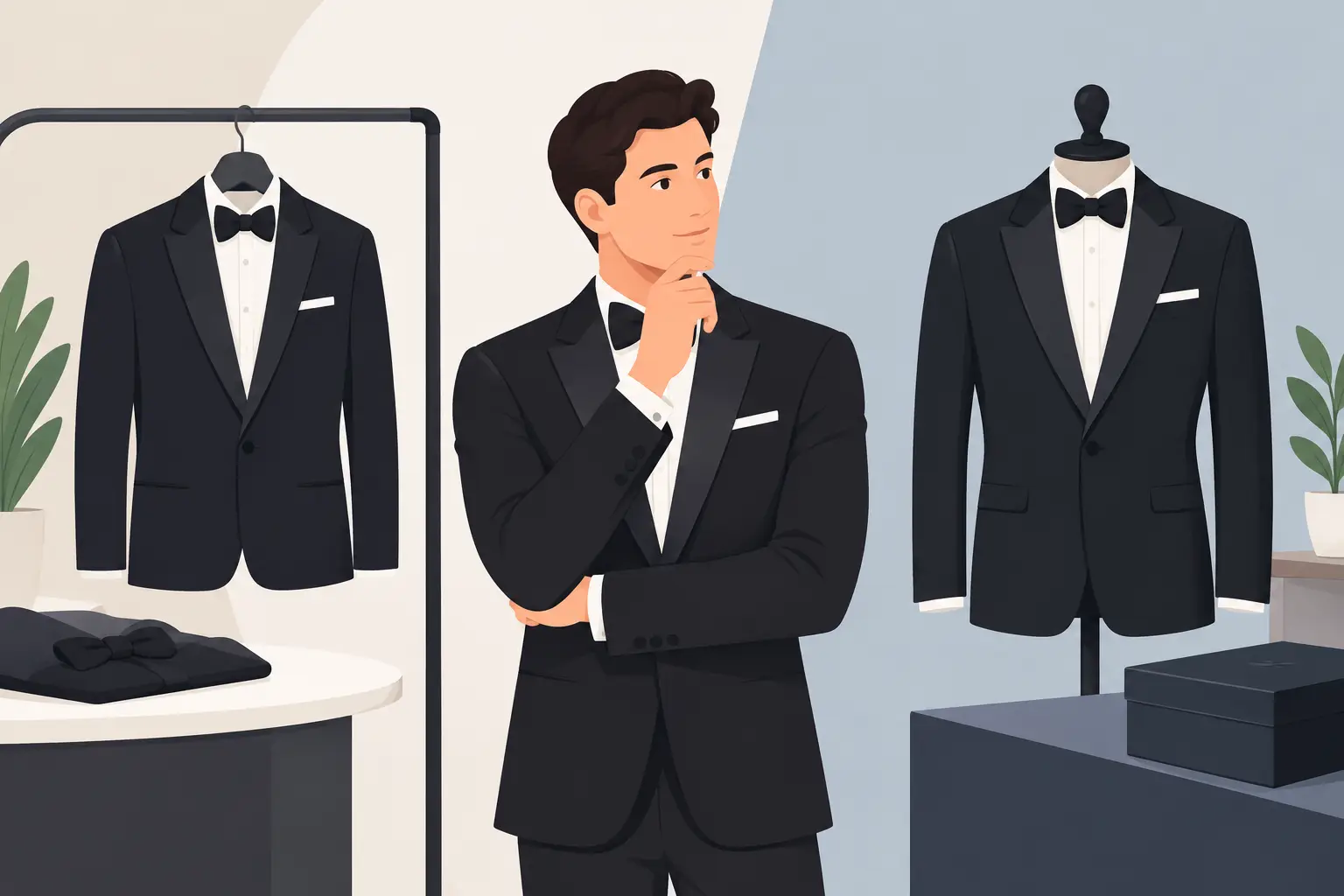
An occasion suit asks different things. A wedding suit may need a touch more presence in the weave, richer texture or a softer palette depending on season and setting. Eveningwear has its own rules of formality, while country tailoring benefits from cloths with body and visual depth. There is no single correct answer, only the right balance between occasion, personal style and longevity.
This is where first-time clients often overreach. A bold check, high-contrast lining or aggressively slim silhouette may feel exciting in the moment, yet can date quickly or distract from the wearer. Equally, playing everything too safe can leave the suit feeling anonymous. The best bespoke tailoring sits in that refined middle ground – distinctive enough to feel personal, disciplined enough to remain elegant for years.
The consultation: where fit and style begin to take shape
A strong consultation is part technical assessment, part style conversation. Your tailor should observe more than chest and waist size. Posture, shoulder slope, gait, neck position and natural stance all influence how the coat should be cut. Just as importantly, he should understand how you want to look. Some men want a clean, commanding business silhouette with strong shoulder expression and a shaped waist. Others prefer softness, comfort and a more understated line.
This stage is also where expectations are set. Bespoke can sharpen the frame dramatically, but it should not feel theatrical or restrictive. A beautifully cut suit allows ease of movement while maintaining poise. If you drive often, work long days seated, or need your jacket to carry cleanly from ceremony to dinner, that should be factored into the pattern and cloth selection.
The most successful commissions come from honesty. If you rarely wear tailoring, say so. If you run warm, travel frequently or want the jacket to work separately with odd trousers, mention it. Precision in tailoring begins with precision in conversation.
Choosing cloth with judgement, not impulse
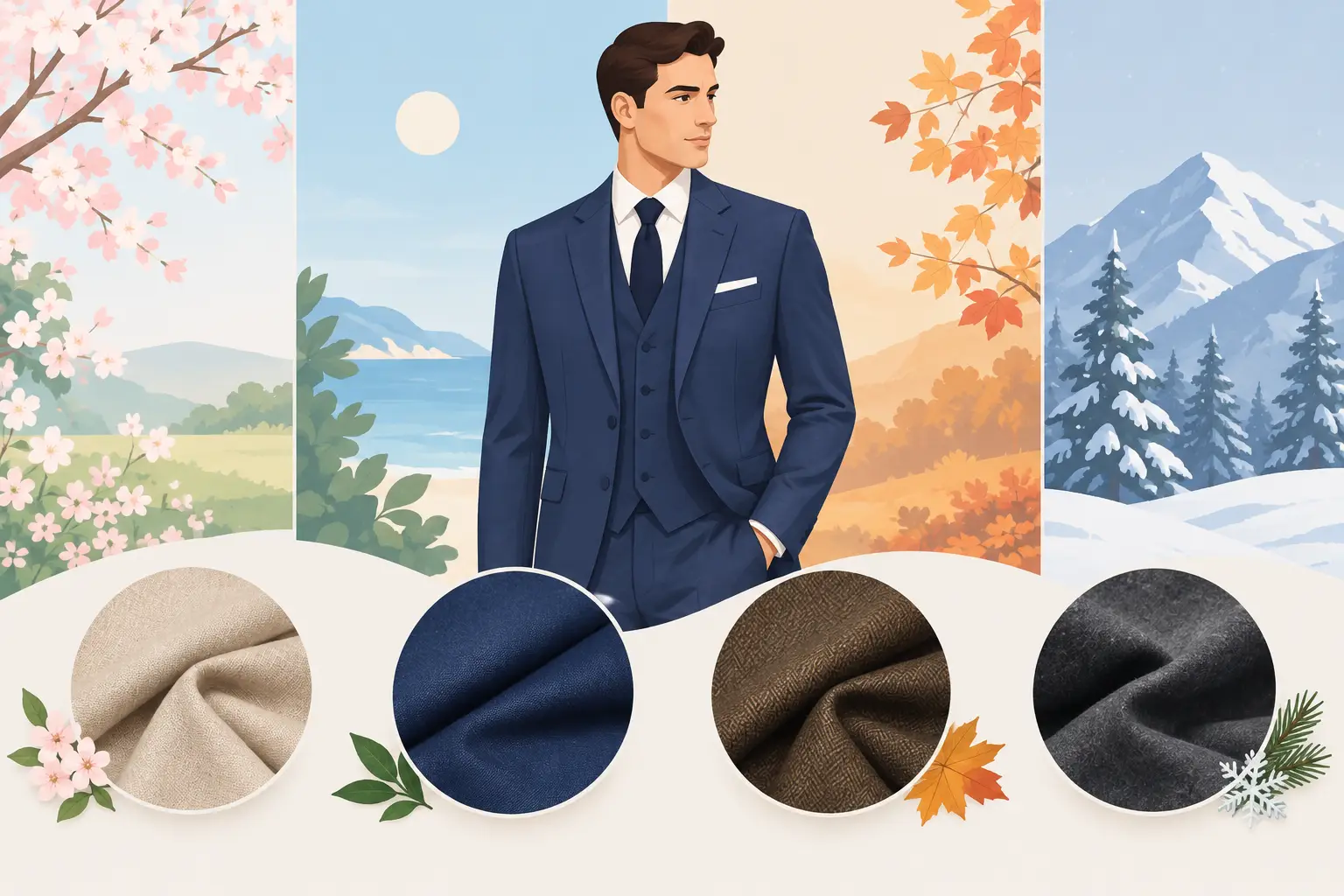
Cloth gives the suit its mood, performance and visual depth. It is tempting to choose purely by touch or pattern, but practical judgement matters just as much. Weight affects drape and seasonality. A lighter cloth can feel effortless in warmer months, though it may crease more readily and show wear sooner if used hard. A slightly heavier cloth often hangs better and stands up more confidently to regular use.
Texture also changes the formality of a suit. Smooth worsteds present a crisp business finish. Fresco and high-twist cloths offer resilience and breathability. Flannel introduces softness and richness, especially in cooler weather. Tweed carries heritage, structure and a more relaxed formality suited to country wear and certain casual wardrobes.
Colour should work with your existing wardrobe and complexion, not just with the current mood. Navy remains unmatched for versatility. Charcoal is urbane and authoritative. Mid-grey can be elegant and adaptable. Beyond these, earth tones, muted green checks or tobacco flannels can be superb in the right context, though usually as a second or third commission rather than a first.
Cut, construction and the details that matter
The visible details of a bespoke suit are only part of the story. What matters equally is how the garment is built. Canvas construction, careful chest shaping, balanced shoulder expression and well-cut trousers all influence how the suit moves and lasts. The result should feel composed, not stiff; sculpted, not strained.
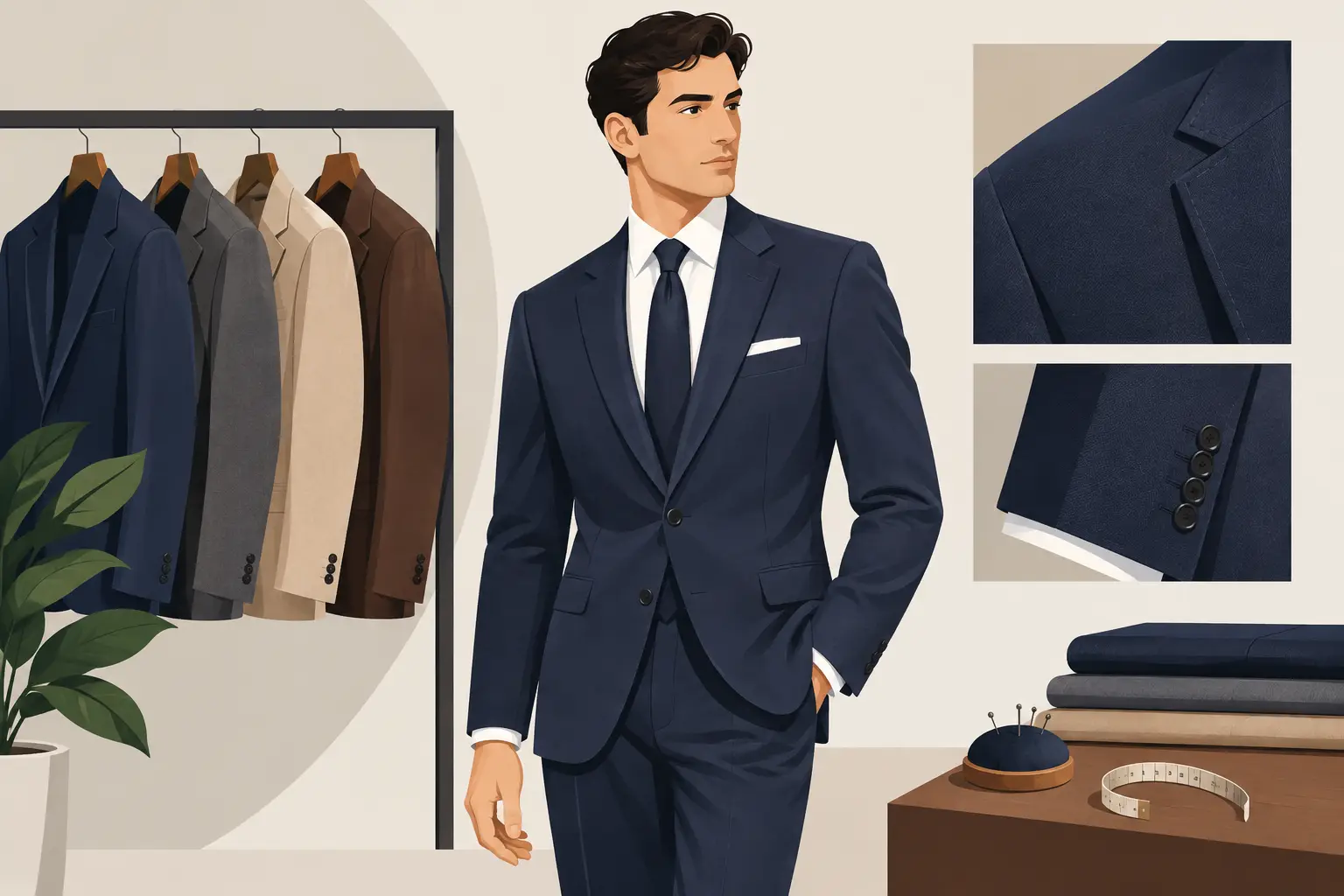
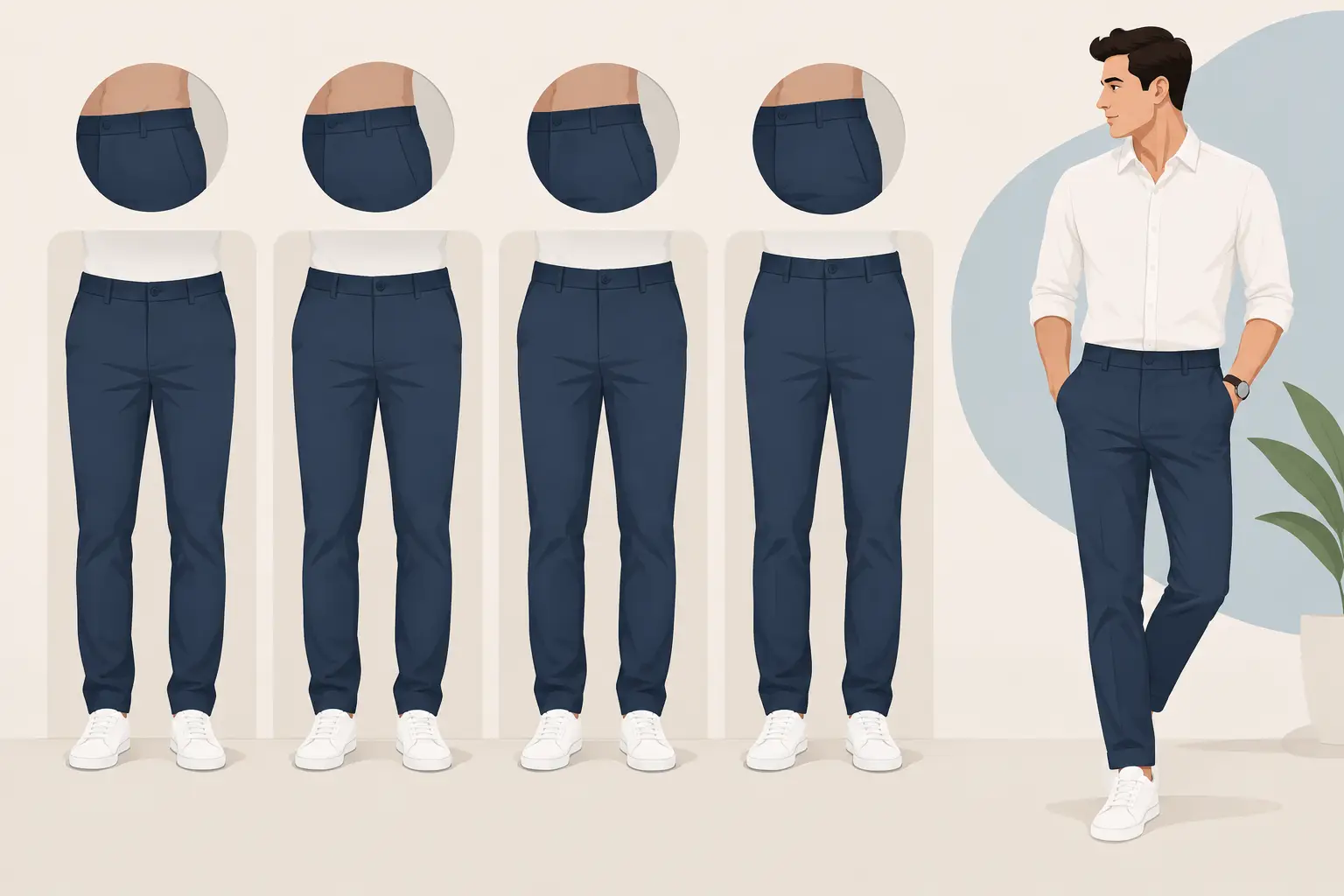
Style details deserve restraint and confidence. Lapel width should harmonise with your frame and the jacket’s button stance. Pocket styles can shift a suit from formal to relaxed. Side adjusters create a cleaner trouser waistband than a belt for many men, though practicality may favour belt loops if the suit is worn in a more utilitarian way. Pleats, once unfairly dismissed by some, can be excellent on the right build and offer welcome comfort and drape.
Small decisions accumulate. The right cuff finish, lining weight, vent style and trouser taper all contribute to a suit that feels considered. None of these details should be chosen for novelty alone. They should support the line of the garment and the life of the wearer.
Fittings: where bespoke earns its reputation
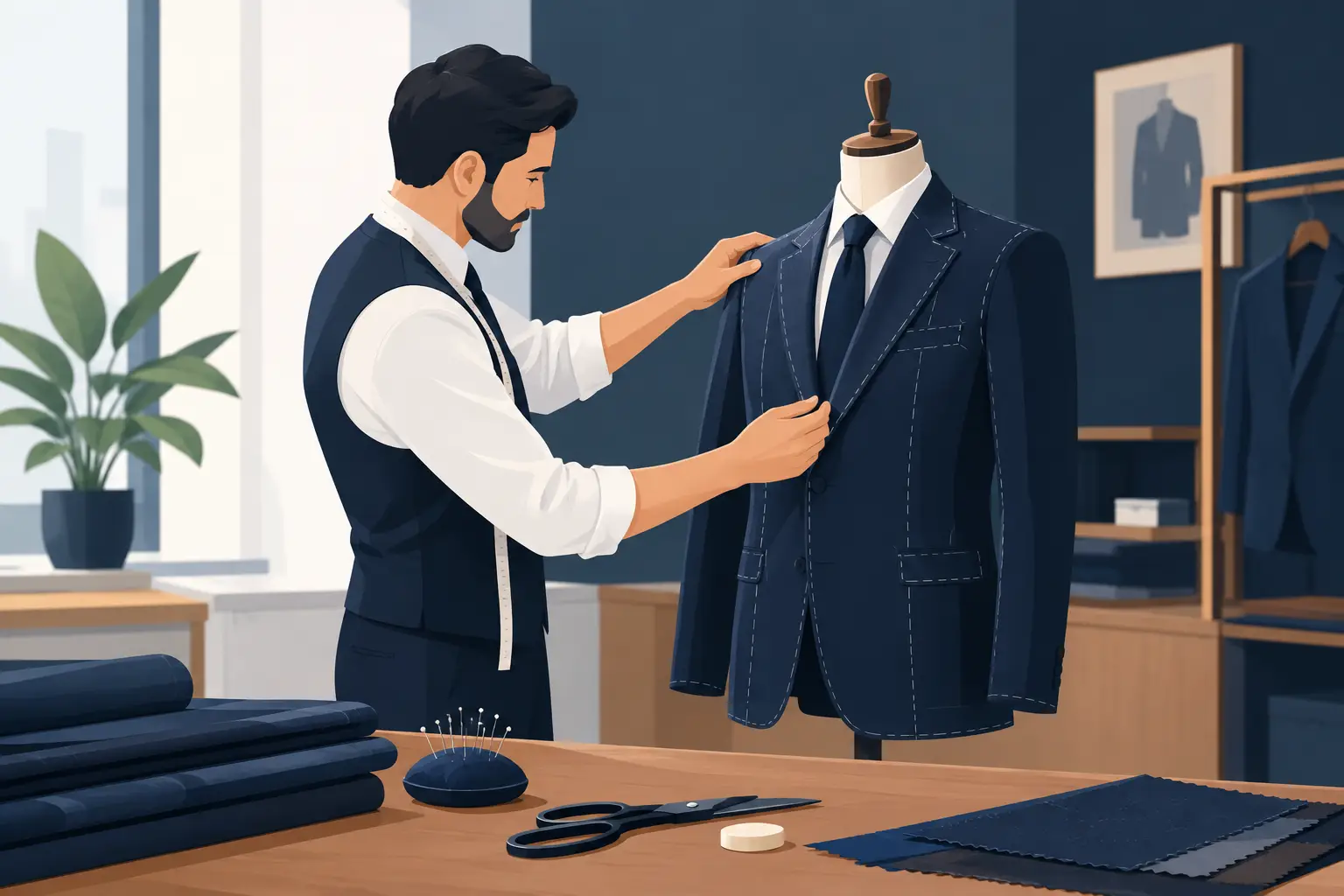
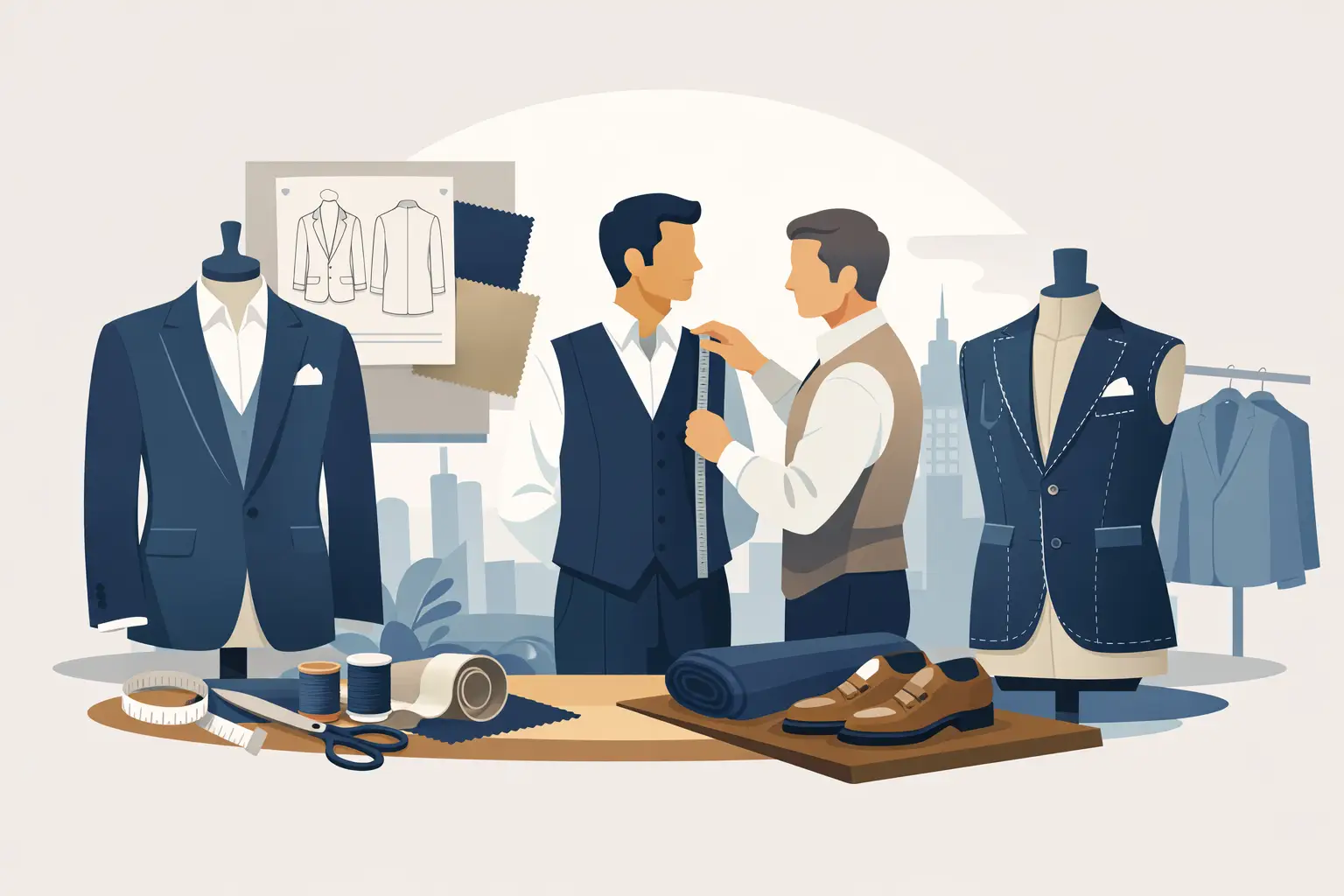
The difference between customisation and true bespoke becomes most obvious at the fitting stage. Here, the garment is assessed in three dimensions and corrected in real time. Balance through the front and back, collar position, sleeve pitch, skirt shape, trouser line and waist suppression are all reviewed against your body in motion as well as at rest.
This is why patience matters. A suit may look promising at the first fitting and still require meaningful refinement. Minor imbalances can affect the whole impression. If the collar does not sit cleanly, if the trouser break is wrong, or if the jacket waist is over-cleaned, the wearer will sense it even if he cannot immediately name the issue.
A good tailor will guide you through these adjustments and explain the reasoning. That reassurance is especially valuable for first-time clients, who may not know what they are looking at yet can certainly feel when something is right. At Manndiip, this stage is often where clients begin to understand the true value of craftsmanship – not as a luxury slogan, but as disciplined attention to proportion.
How to judge the finished suit
When your bespoke suit is ready, the first sign of success is not drama. It is ease. The jacket should sit cleanly at the collar, the shoulders should look natural, and the chest should have shape without tension. Trousers should fall with purpose, not pull or collapse. You should feel taller, more composed and more certain of your appearance without seeming overdressed as yourself.
Perfection, however, depends on use. A wedding suit can be cut with slightly more flair than a daily business suit. A winter flannel will behave differently from a summer high-twist cloth. Bespoke is not about one abstract ideal. It is about the right answer for your wardrobe, body and circumstances.
That is why the best commissions often lead to a second. Once a first suit establishes your pattern and your preferred line, future pieces become even more precise. A business navy may be followed by a wedding suit, a dinner jacket, a covert coat or a quietly confident tweed. Over time, wardrobe building becomes less about accumulation and more about refinement.
A bespoke suit should never feel like an indulgence detached from real life. It should feel like a standard you choose for yourself – one that sharpens how you are seen, and just as importantly, how you carry yourself the moment you put it on.