
A lapel seems like a small detail until you try on two jackets cut from the same cloth and realise one makes you look sharper, broader and more assured. That is why knowing how to choose lapel style matters. The right lapel does not simply decorate a jacket – it frames the chest, influences proportion and sets the tone for the entire suit.
For a man investing in bespoke or made-to-measure tailoring, lapels deserve more attention than they usually receive. They sit close to the face, shape the upper body and quietly signal whether a suit is intended for the boardroom, a wedding or black-tie dressing. Get the choice right and the whole garment feels more considered.
How to choose lapel style starts with the occasion
The first question is not which lapel looks best in isolation. It is where the suit will be worn, how often and what impression it needs to create.
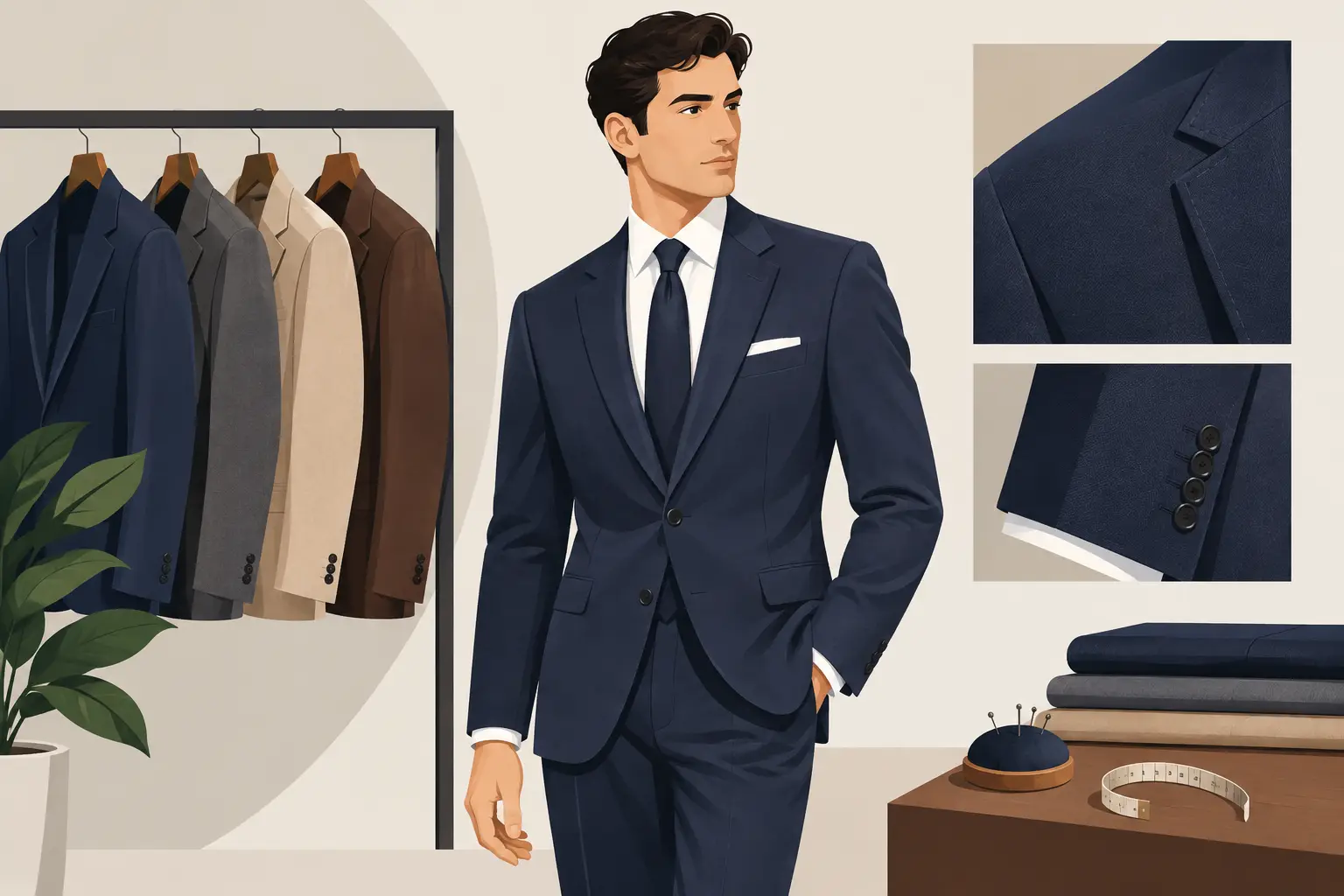
A notch lapel is the most versatile and the most widely worn. It is defined by the visible notch where the collar meets the lapel, and it sits naturally in business settings. For office tailoring, client meetings and everyday professional wear, it delivers polish without appearing overstated. If you are commissioning your first proper suit and want maximum use from it, notch lapels are usually the safest and smartest starting point.
A peak lapel brings more authority. Its pointed edge angles upward towards the shoulder, which gives the chest a stronger line and a more formal presence. On a business suit, a peak lapel can look commanding and elegant, particularly when the jacket is cut cleanly and the proportions are disciplined. It is also a superb choice for wedding tailoring, where a little extra drama is welcome.
A shawl lapel is the most formal of the three and belongs primarily to dinner jackets and black-tie dressing. Its continuous curved line has no notch or peak, which creates a smoother, more refined silhouette. If the event calls for eveningwear, the shawl lapel has a sophistication that is difficult to match. Outside formalwear, however, it can feel too specialised for regular daytime use.
So the first rule is straightforward: choose a lapel that matches the role of the garment. Notch for versatility, peak for presence, shawl for evening elegance.
Proportion matters more than trend
Many men ask which lapel is fashionable. A better question is which lapel is proportionate. Tailoring looks expensive when every line is in balance, and lapel width plays a central role in that balance.
A very slim lapel can make a jacket look contemporary for a season, but it often dates quickly. It can also make broader men look larger by comparison, because the narrowness exaggerates the width of the torso. At the other end, an overly wide lapel can look theatrical unless the whole jacket is cut to support it.
In most cases, the strongest option is a lapel width that sits in harmony with the wearer’s shoulders, chest and tie width. A man with a broader frame usually benefits from a fuller lapel, as it keeps the upper body in scale. A slimmer man often looks best with a moderately cut lapel rather than an extreme one. The goal is visual equilibrium, not novelty.
This is where bespoke guidance becomes especially valuable. A lapel should be designed in relation to the gorge position, the button stance, the shoulder expression and the jacket length. None of those elements exists on its own. A good cutter does not select a lapel from a menu. He shapes it as part of the entire silhouette.
Lapel width and body shape
If you are tall and lean, a slightly broader lapel can add welcome substance to the chest. If you are shorter, keeping the lapel neat and well judged can help maintain a cleaner vertical line. For broader builds, a medium to slightly wider lapel usually feels more balanced than a narrow one.
There is no universal formula because posture, shoulder slope and chest depth all affect how a jacket presents on the body. That is why blanket style rules often fall short. The best lapel is the one that flatters your frame without calling too much attention to itself.
The relationship between lapel style and formality
Not all formalities are equal. A navy business suit, a wedding three-piece and a black dinner jacket may all be tailored garments, but each asks something different of the lapel.
For business tailoring, notch lapels remain the benchmark because they are elegant without feeling ceremonial. They pair effortlessly with worsted cloths, crisp shirts and a professional wardrobe that needs repeat wear. A peak lapel can still work beautifully in business, particularly for senior professionals or men who prefer a more assertive look, but it should be handled with restraint.
For weddings, the field opens up. A peak lapel often feels especially appropriate because it carries celebration and structure at once. It photographs well, sharpens the chest line and brings distinction without slipping into costume. Notch lapels still work for a wedding, particularly for a groom seeking understated sophistication, while shawl lapels excel when the outfit leans towards formal evening style.
For black tie, the decision is more traditional. Shawl and peak lapels are the correct language. Notch lapels are generally less refined in this setting, even if they appear on some ready-to-wear dinner suits. If the occasion is genuinely formal, the lapel should reflect that standard.
Cloth and construction should influence the choice
A lapel does not only look different according to style. It behaves differently according to cloth weight, texture and jacket construction.
In a clean worsted business suit, a notch or peak lapel holds a crisp edge and appears precise. In a textured tweed jacket or country suit, the same lapel may read more relaxed because the cloth softens the line. That is not a flaw. It is part of the charm. A wider peak in a heavy tweed can feel characterful and confident, while a narrow lapel in the same cloth may struggle to carry enough presence.
Construction also matters. A softly built jacket with light canvassing and natural shoulders can make a peak lapel feel less severe and more wearable. A structured jacket with a firm chest and pronounced roping will make that same lapel look more formal and architectural.
This is where nuance comes in. The lapel style is never just about the sketch. It is about how the cloth, the canvas and the body animate it.
How to choose lapel style without overcomplicating it
If you want a clear path through the decision, begin with your most likely use.
If this is your first tailored suit, worn chiefly for business and polished social occasions, choose a notch lapel in a balanced width. It gives you range, longevity and quiet sophistication.
If you want a suit with more distinction – perhaps for a wedding, a special business wardrobe or a stronger sartorial identity – a peak lapel is often the right move. It has more flair, but when proportioned properly it remains timeless.
If you are commissioning eveningwear, choose a shawl or peak lapel according to taste and the level of formality. Shawl is elegant and fluid. Peak is sharper and more commanding.
Then consider your frame, your height and the scale of your features. A lapel should echo those proportions rather than fight them. Finally, think about longevity. The most satisfying tailoring choices are rarely the loudest. They are the ones that still look right years from now.
Common mistakes men make with lapels
The most frequent mistake is choosing by trend rather than proportion. Fashion swings between skinny and oversized details, but tailoring lives or dies by balance. Another common error is ignoring the purpose of the suit. A dramatic peak lapel may look wonderful, but if the suit needs to function as an everyday business staple, a notch may serve you better.
Men also underestimate how much the lapel affects the face and upper body. Because it sits so close to the shirt, tie and collar, it can either sharpen your appearance or subtly throw the whole jacket off. Even small adjustments in width, gorge height or lapel belly can change the character of the suit.
At a house such as Manndiip, that is where true craftsmanship shows itself – in details refined not for show, but for the way they elevate the wearer.
A well-chosen lapel does more than complete a jacket. It gives the suit its voice. Choose the one that speaks with your authority, suits your occasion and feels entirely at home on your frame.