Few things spoil an otherwise polished outfit faster than cloth pooling untidily over the shoe. If you have been wondering how to stop trousers from bunching at ankles, the answer is rarely one single fix. In most cases, bunching comes down to proportion – the relationship between trouser length, hem width, leg shape, cloth weight and the shoes worn beneath.
That is why two pairs of trousers can be the same labelled size yet behave completely differently at the ankle. A well-cut trouser should fall with intention. It should skim the leg, break cleanly where desired and create a line that looks deliberate rather than accidental. When it bunches, the impression is less refined, and the silhouette loses much of its authority.
Why trousers bunch at the ankle
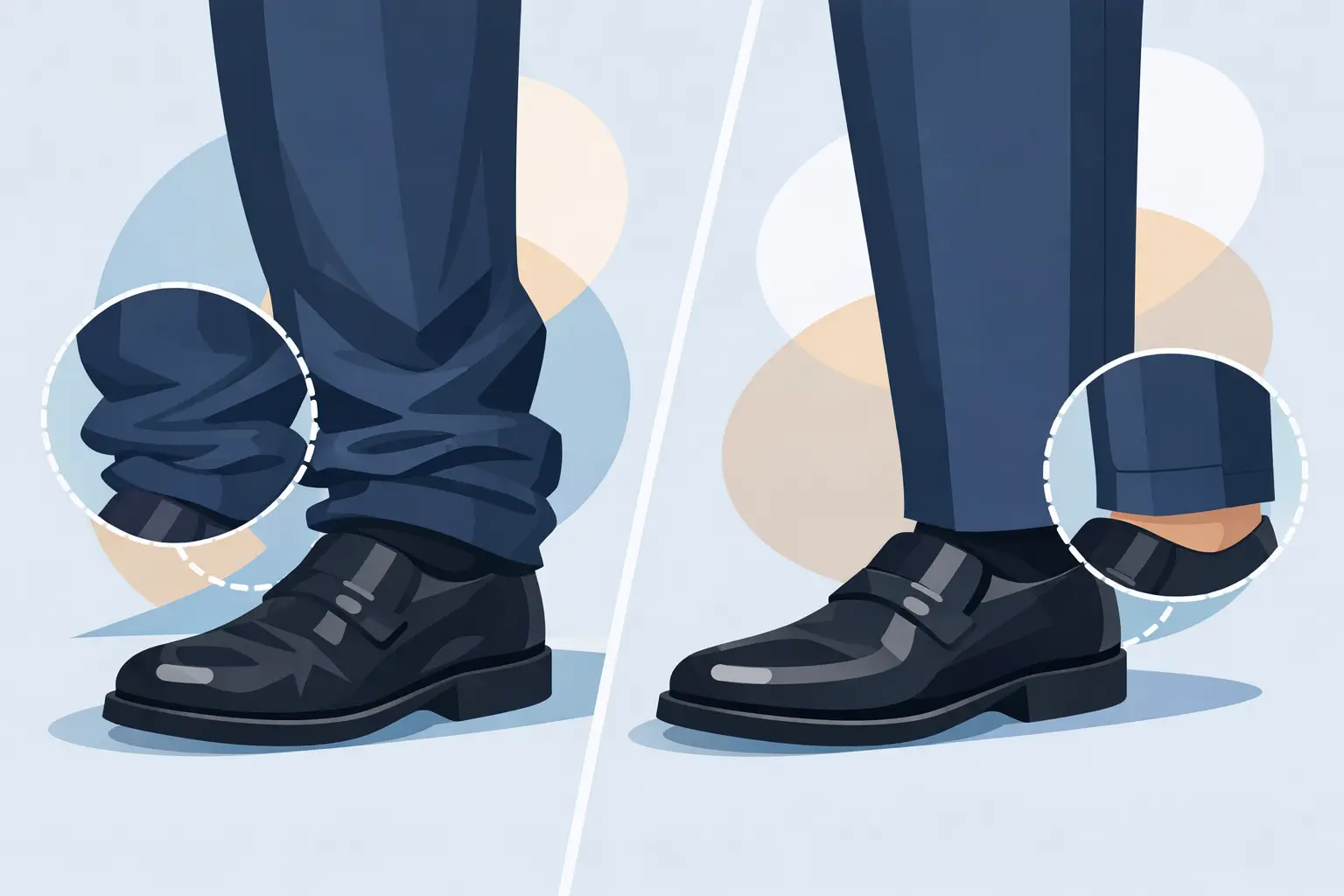
Bunching happens when there is more cloth than the lower leg and shoe can accommodate neatly. Sometimes the trouser is simply too long. Sometimes the leg opening is too narrow and catches on the calf or the top of the shoe. In other cases, the trouser has too much width through the lower leg, so the fabric collapses into folds instead of hanging cleanly.
Fabric also plays a part. Heavier cloths, denim, brushed cotton and some flannels can stack more readily than a lighter worsted wool. Equally, a slim trouser worn over a bulky boot may ruck up because the opening cannot settle properly over the footwear. This is where many men misread the problem. They assume the hem alone is at fault, when the issue is often the cut as a whole.
Posture and build matter too. Prominent calves, bowed legs or a more athletic lower body can change how the cloth drops. A trouser cut that works beautifully on one man may catch and crease awkwardly on another. Proper fit is always personal.
How to stop trousers from bunching at ankles in everyday wear
The first place to look is the hem length. If the trouser is dropping too far onto the shoe, the excess cloth has nowhere to go but into folds. For a cleaner, contemporary finish, many men benefit from a slight break or even no break, depending on the formality of the garment and the overall styling.
A full break can work in classic tailoring, particularly with wider-cut trousers, but it must still be controlled. If the fabric is puddling around the ankle, that is not elegant drape. It is simply too long. Shortening the hem by even a centimetre can transform the line.
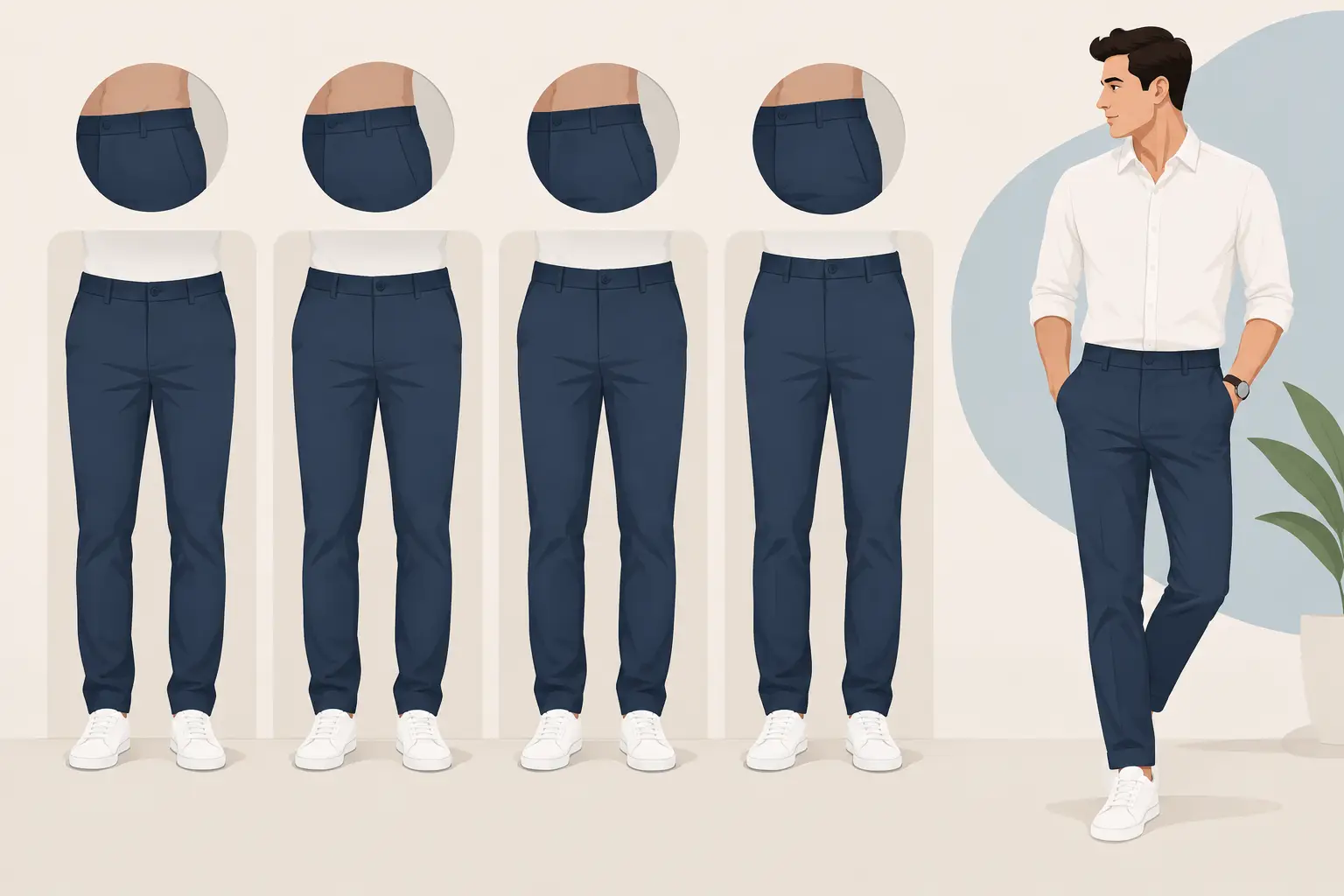
The second consideration is taper. If the trouser narrows too aggressively below the knee, it may grip the calf and then sit awkwardly above the shoe, causing horizontal creasing and bunching. This is common in fashion-led slim fits that look tidy on a hanger but perform poorly once worn. A slightly cleaner taper, shaped to your actual leg rather than an abstract ideal, often produces a far more sophisticated result.
Then there is the hem opening. If it is too wide, the trouser can collapse into itself. If it is too narrow, it can catch. The right opening depends on your height, shoe size, leg shape and the style of the trouser. A formal wool trouser for business wear should usually fall differently from a heavier trouser worn with country boots or winter layers.
The role of break, taper and shoe choice
Trouser break deserves more attention than it usually gets. Break is the point where the front of the trouser meets the shoe. Minimal break creates a crisp, modern look. Medium break feels traditional and versatile. Full break is more classic, but it can quickly tip into heaviness if the leg is narrow or the cloth is thick.
If your aim is to stop bunching without making the trouser look too short, a slight break is often the safest balance. It keeps the line clean while preserving enough length for elegance.
Shoes can alter everything. A low-profile loafer, a classic Oxford and a chunky Derby do not support the same hem in the same way. Trousers that sit perfectly over one pair may bunch over another because the vamp height and shape are different. This is especially noticeable with boots. A narrow hem over a substantial Chelsea or lace-up boot may ride up, twist or gather.
That is why fittings should ideally be done with the shoes you actually intend to wear. Precision lives in these details. If the trouser is being cut or altered for business use, wedding wear or formal dressing, the footwear should be part of the decision, not an afterthought.
When the issue is the cut, not the length
Many men shorten trousers repeatedly and still find they bunch. At that point, the problem is usually elsewhere. The seat may be unbalanced, causing the leg to hang incorrectly. The thigh may be too tight, forcing the cloth to drag lower down. The calf may need more room, or the lower leg may need a gentler line.
This is where off-the-peg garments often reveal their limits. Ready-made sizing works from averages, but the body is not average. One man needs more room through the calf. Another needs the hem reduced without losing shape through the knee. Another has one leg fractionally different from the other, which is more common than most people realise.
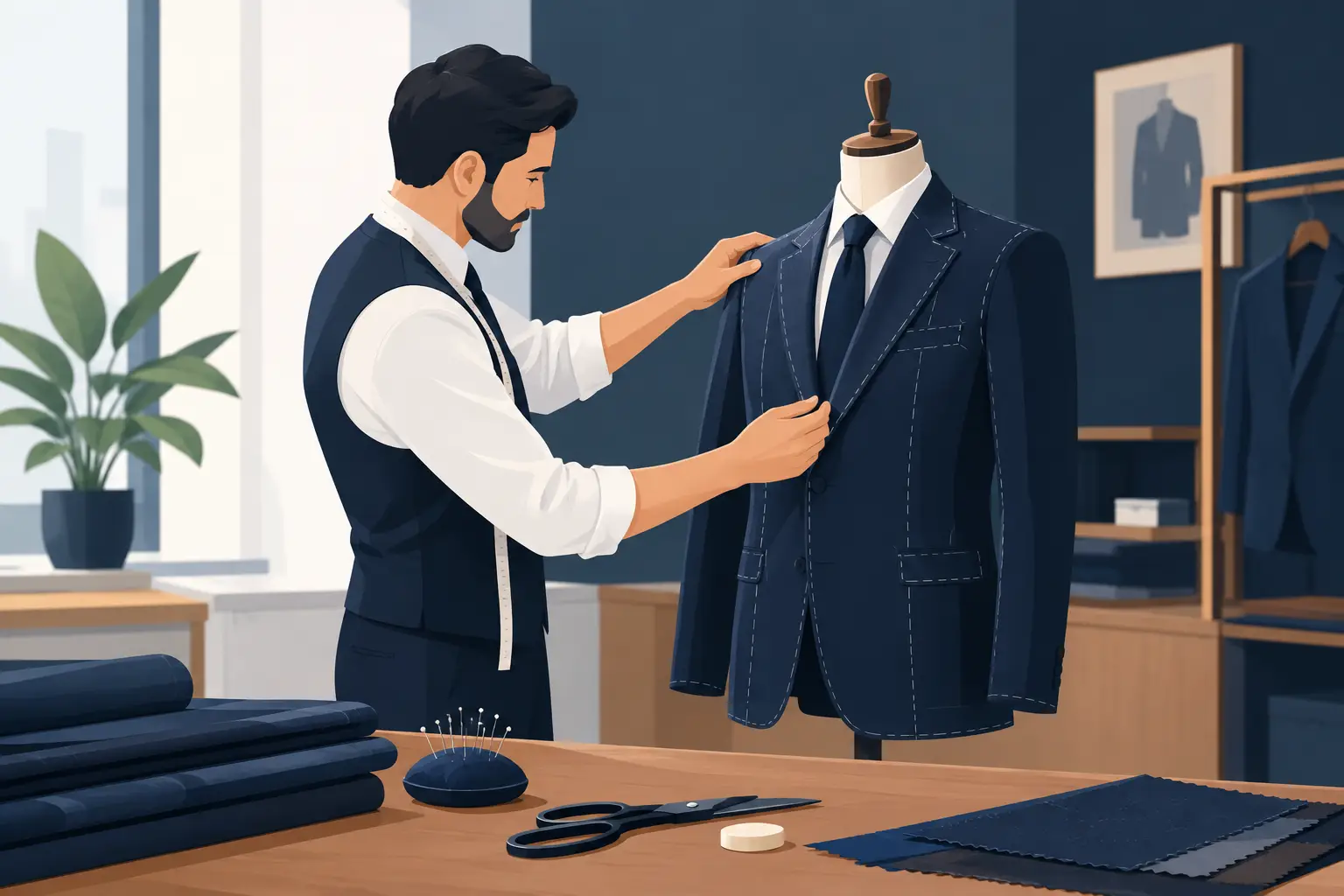
An experienced tailor reads these subtleties quickly. Instead of treating bunching as a simple hemming issue, he looks at the whole architecture of the trouser. That is the difference between making trousers shorter and making them fall properly.
How to stop trousers from bunching at ankles with alterations
A proper alteration begins with diagnosis. If the trouser is only marginally too long and otherwise balanced, shortening the hem may be all that is needed. If the lower leg is too broad, tapering can refine the drape. If the calf is causing resistance, a tailor may need to adjust the leg line so the cloth clears the body more cleanly.
There are, however, trade-offs. Too much taper can make the ankle cleaner but the movement worse. Too little break may solve bunching when standing still, yet leave the trouser looking skimpy when seated or walking. The goal is not to remove every crease at all costs. Trousers are meant to move. The goal is to ensure the creasing looks natural, not messy.
Turn-ups can also influence the fall. On some tailored trousers, a cuff adds weight at the hem and helps the cloth hang better. On others, especially where the cut is already heavy or the wearer is shorter, it can make the bottom half feel too dense. Again, it depends on the garment and the man wearing it.
For denim and casual trousers, stacking at the ankle is sometimes intentional. For tailored trousers, especially in professional and ceremonial settings, it rarely flatters. A sharp line at the ankle conveys care, precision and confidence.
What to ask for at a fitting
If you are having trousers altered, it helps to be specific about the look you want. Rather than saying you dislike the bunching, say whether you prefer no break, slight break or something more classic. Mention the shoes you wear most often with that trouser. If one leg twists or catches more than the other, say so. These are useful clues.
It is also worth standing naturally. Many people adjust their posture in front of a mirror and then wonder why the trousers behave differently in real life. A good fitting should account for how you actually carry yourself, not how you pose for thirty seconds.
Bring context into the conversation. Business trousers need a different finish from wedding trousers. Evening wear often benefits from a cleaner, more uninterrupted line. Tweed or country trousers may allow a little more substance, provided the hem still sits with purpose.
The best long-term fix is better trouser design
If bunching is a recurring problem across multiple pairs, the most effective answer may be to start with a better pattern. Trousers designed around your proportions will always outperform generic sizing, because the rise, thigh, knee, calf and hem are working together from the outset.
That is where bespoke and well-executed made-to-measure earn their place. The advantage is not merely comfort. It is visual discipline. The cloth falls as it should, the hem meets the shoe with intent, and the whole silhouette appears more composed. At Manndiip, that level of refinement begins with understanding how a client wants to look and move, then translating that into a trouser cut with clarity and balance.
Bunching at the ankle may seem like a minor flaw, but small flaws are often what separate a passable outfit from one that feels meticulously considered. When the line of the trouser is right, everything above it looks stronger too. Start there, and the rest of the silhouette tends to follow.