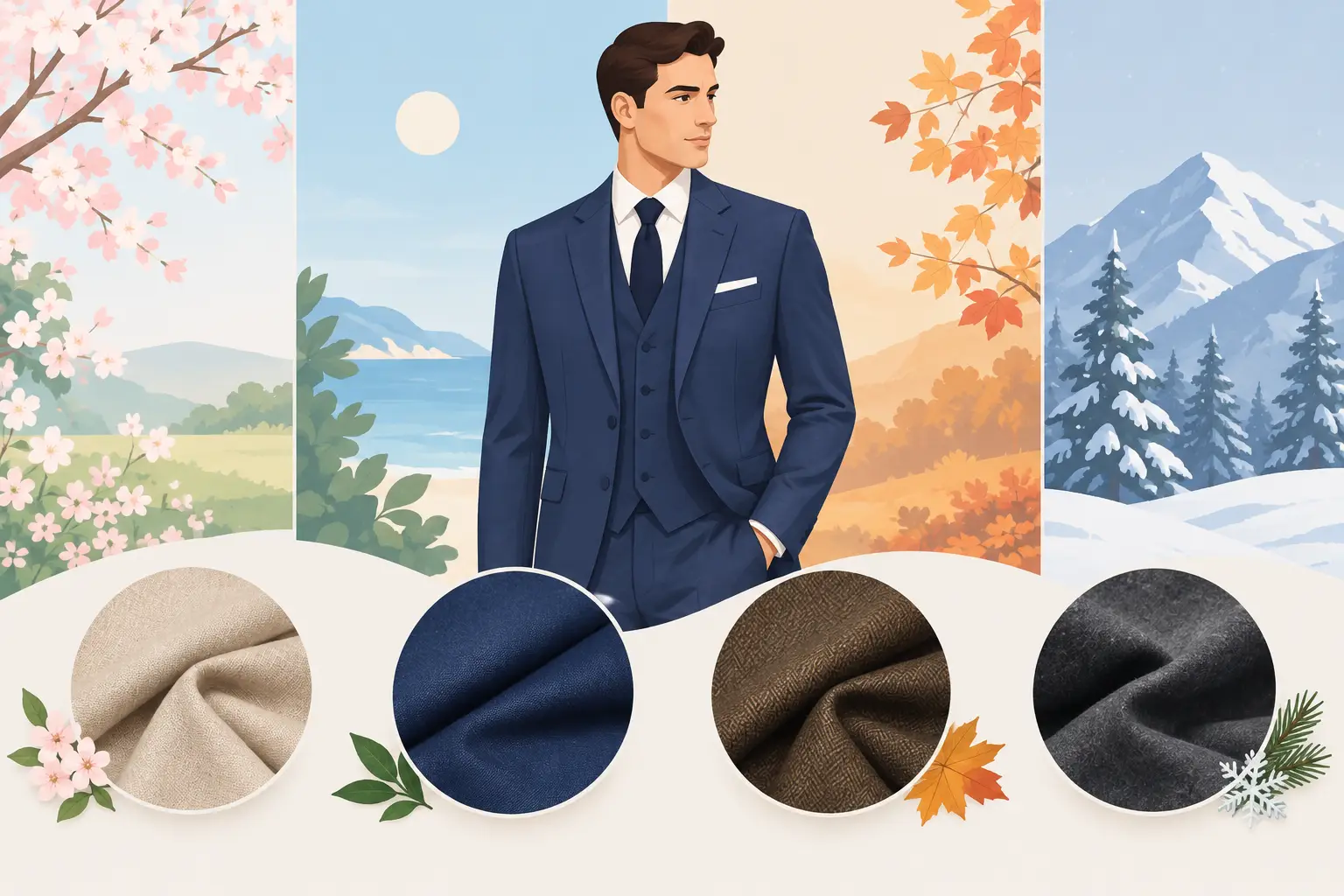
If you have ever stood in front of a rail of suits and wondered what is the difference between bespoke and custom, you are asking exactly the right question. The two words are often used as if they mean the same thing, yet in tailoring they point to very different levels of craft, fit, and personalisation. For a man investing in a business suit, wedding suit, dinner jacket or overcoat, that distinction matters.
At a glance, custom usually means an existing base garment or standard block is adjusted to suit your measurements and preferences. Bespoke means the garment is created specifically for you from the ground up, with a unique pattern drafted to your body, posture, balance and style requirements. Both can produce a polished result, but they do not begin from the same place, and that starting point affects everything that follows.
What is the difference between bespoke and custom in tailoring?
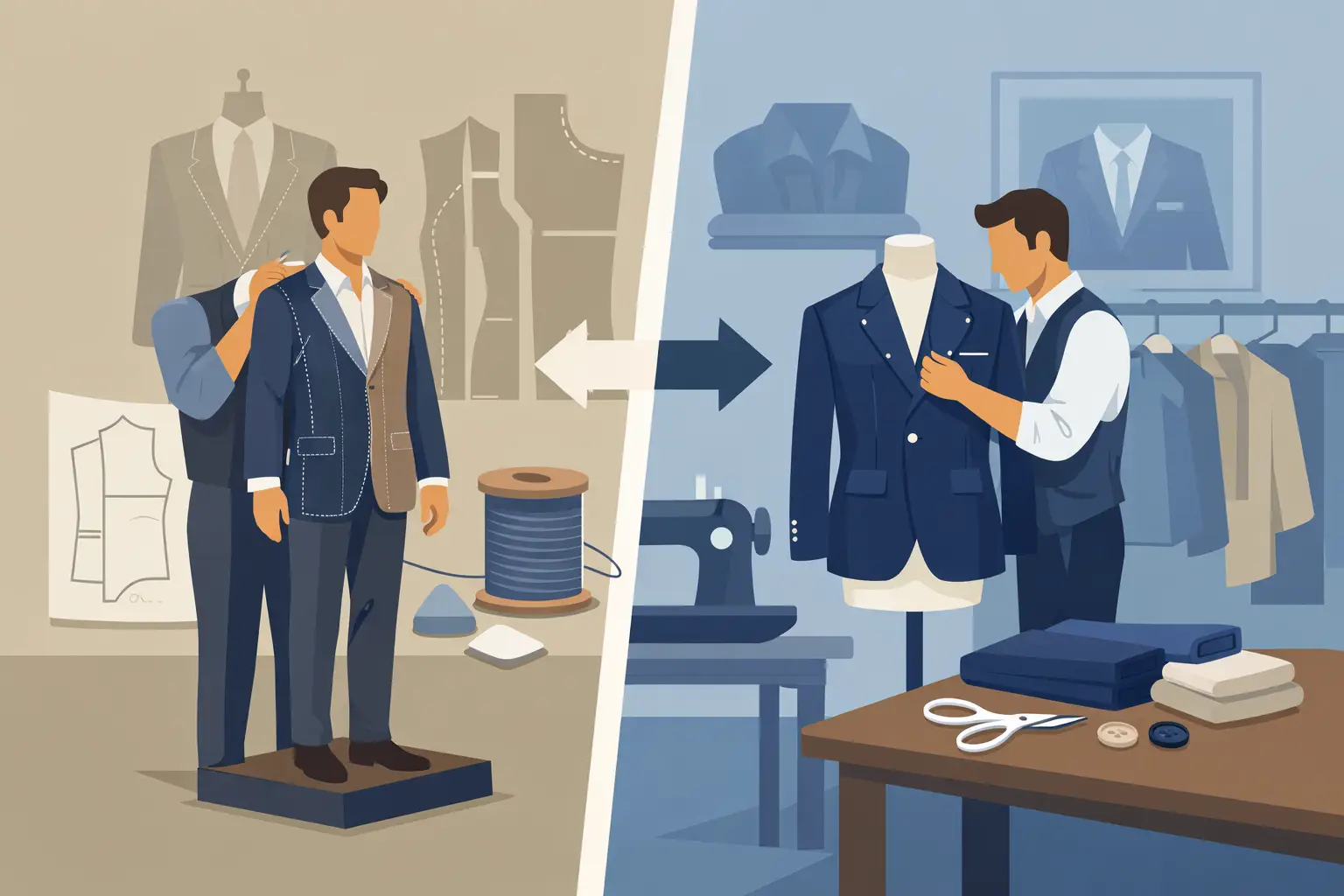
The simplest way to frame it is this: custom adapts, bespoke originates.
A custom garment typically works from a pre-developed pattern. Your chest, waist, sleeve, trouser length and other measurements are taken, then the house adjusts an existing template to achieve a closer fit. You may be offered a range of cloths, linings, lapel shapes, buttons and pocket options, but the underlying architecture of the garment is not wholly exclusive to you.
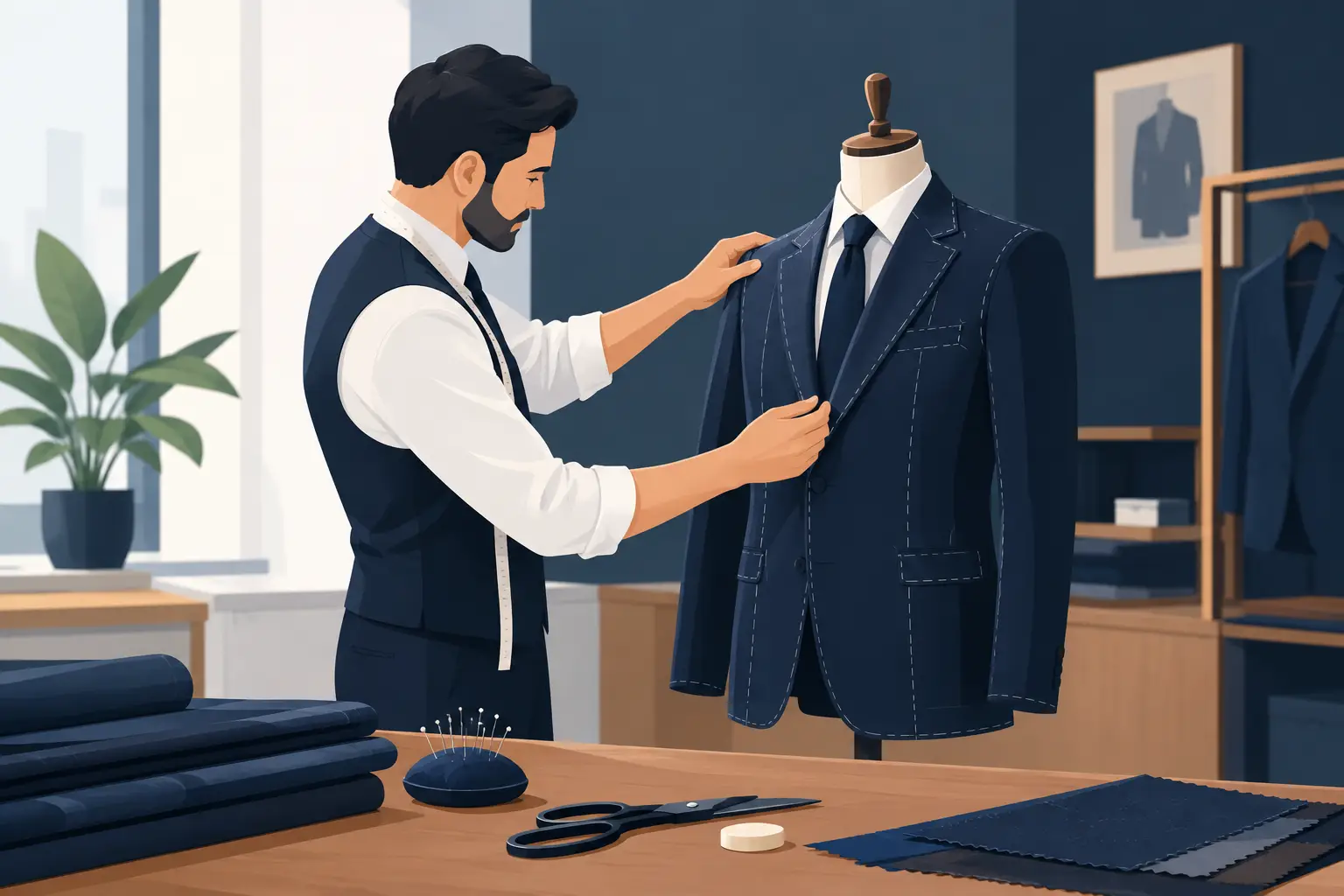
A bespoke garment is cut from scratch. The cutter studies not only your measurements, but also the way your body actually carries cloth. One shoulder may sit lower than the other. Your stance may be erect, forward, or slightly stooped. Your right arm may hang differently from your left. Your seat, thigh, calf and trouser break may all require specific decisions. These are not minor corrections. They are the very foundation of the pattern.
That is why bespoke has long been regarded as the highest expression of sartorial craftsmanship. It is not simply more choice. It is a different discipline.
Bespoke vs custom – the real differences
Fit is the first and most obvious difference, but not the only one. Bespoke fit is built around your individual proportions and body contours from the first cut. Custom fit is often more efficient and can be very successful for men with relatively balanced proportions, yet it has limits when the body falls outside a standard block.
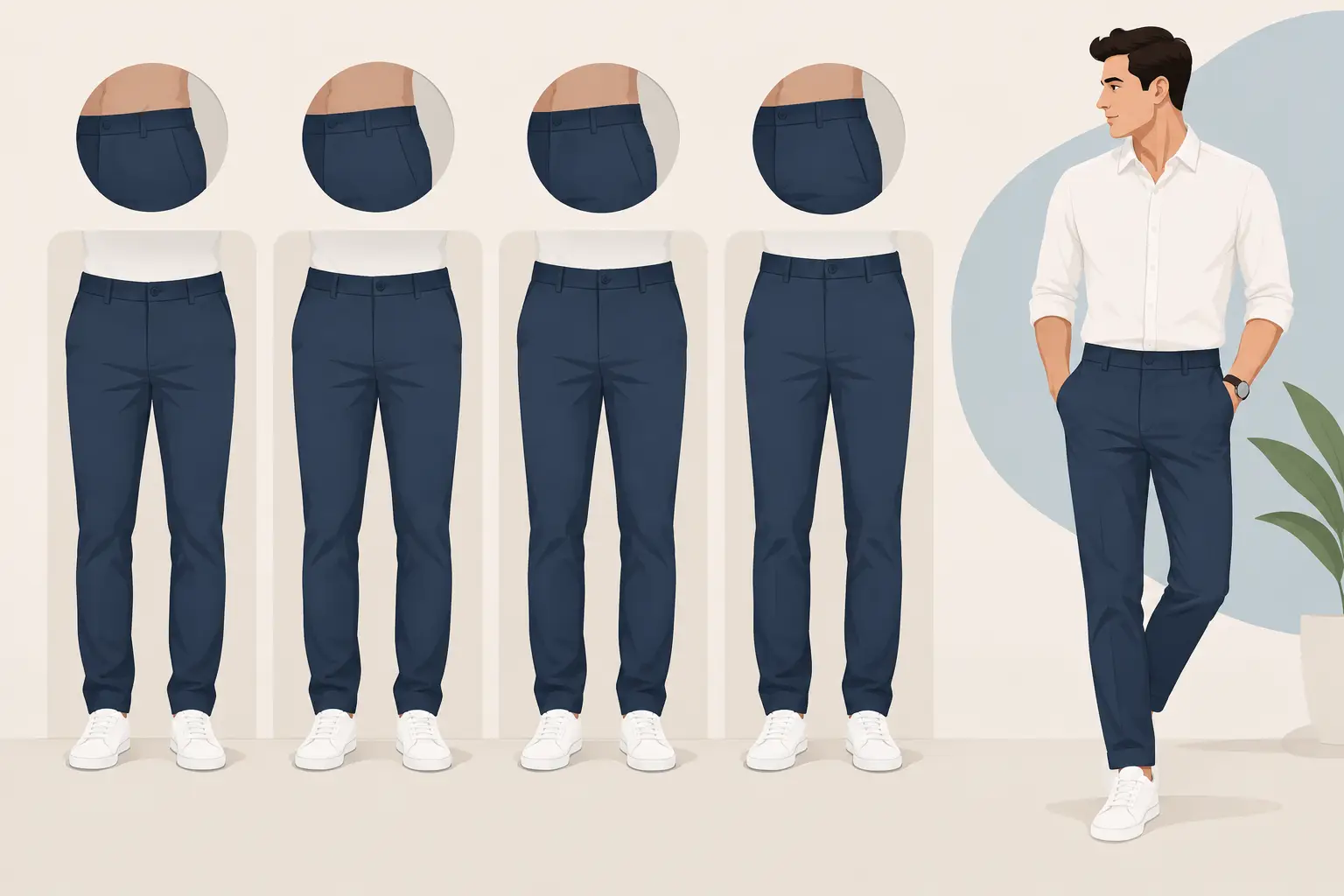
Construction is another dividing line. In bespoke tailoring, the cutter and tailor can make highly specific structural decisions – where the jacket should suppress at the waist, how the chest should drape, how the shoulder should be shaped, how the trousers should sit cleanly from the seat to the hem. These are not cosmetic tweaks. They influence presence, comfort and longevity.
The fitting process also differs. Bespoke usually involves multiple fittings, sometimes including a baste fitting where the garment is partially assembled to assess balance and line before final construction. That stage allows substantial refinement. Custom often involves fewer stages and less room for dramatic correction once the garment is underway.
Then there is exclusivity. With bespoke, your paper pattern is your own. It becomes a record of your shape and preferences, refined over time as your wardrobe develops. With custom, the house may store your measurements and order history, but the core template remains part of a broader system.
None of this makes custom inferior in every context. It makes it different.
When custom makes sense
Custom tailoring can be an excellent option for a client who wants a sharper fit than off-the-peg without entering the full bespoke process. It can suit men who need a reliable business wardrobe, have straightforward fitting needs, or want a garment delivered with greater speed and a more moderate investment.
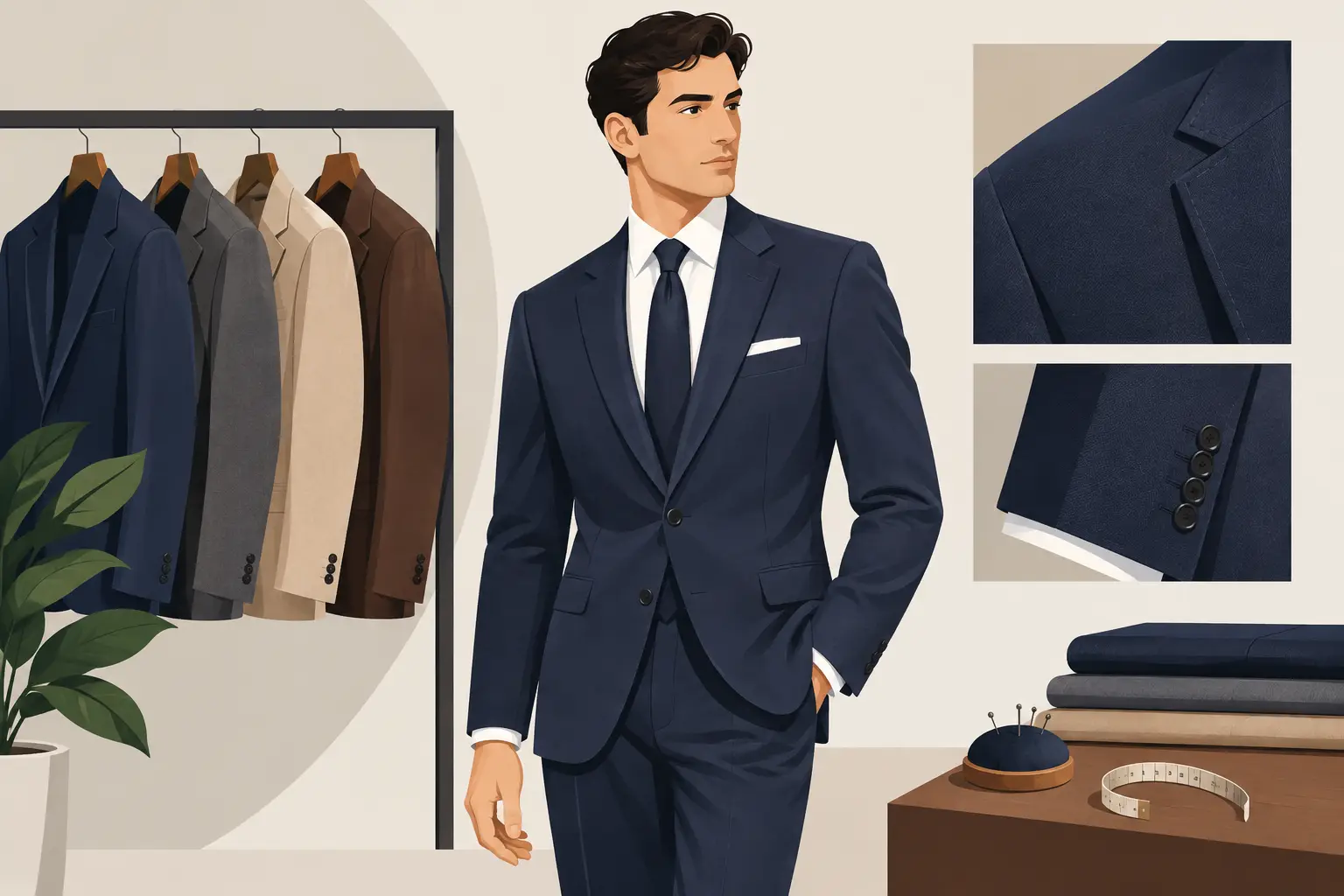
For example, if you know you favour a navy business suit with a classic notch lapel, side adjusters and a clean tapered trouser, custom may provide exactly the level of refinement you need. The result can feel markedly superior to ready-to-wear, particularly when handled by an experienced tailoring house that understands proportion and finishing.
Custom can also work well for shirts, where the construction is generally less structurally complex than a tailored jacket. Likewise, some clients use custom as an entry point – a way to understand cloths, silhouettes and styling choices before progressing to full bespoke.
The key is honesty. Custom is not bespoke with a shorter lead time. It is its own category, and when presented properly, it has real merit.
When bespoke is worth it
Bespoke comes into its own when precision is non-negotiable.
If you struggle with standard sizing, have noticeably uneven posture, require a jacket that must perform flawlessly in high-visibility settings, or simply want the quiet confidence of a garment shaped entirely around you, bespoke justifies itself. This is especially true for wedding tailoring, black tie, and cornerstone business pieces worn repeatedly in consequential rooms.
The value of bespoke is not only in how it looks when you first put it on. It is in how it moves, how it settles across the shoulders after hours of wear, how the collar stays close to the neck, and how the trousers maintain a clean line without pulling or collapsing in the wrong places. True luxury in tailoring is rarely loud. More often, it appears as ease.
For many men, bespoke also answers a deeper brief. Clothing at this level becomes an expression of identity. The cloth, lapel width, button stance, cuff treatment, pocket style and silhouette are chosen not merely because they are available, but because they form a coherent picture of the wearer.
Why the terms get confused
Part of the confusion comes from marketing. In fashion, premium language is used freely, and bespoke has become a desirable shorthand for anything personalised. Yet in traditional tailoring, the term carries a very specific meaning tied to individual pattern cutting and a more involved making process.
That does not mean every bespoke house works in exactly the same way, nor that every custom programme is basic. There is nuance. Some custom garments are exceptionally well executed. Some so-called bespoke services are closer to made-to-measure in practice. If you are commissioning tailoring, the wise question is not what a brand calls it, but how the garment is actually developed.
Ask whether your pattern is drafted from scratch. Ask how many fittings are included. Ask what can be changed during the process. Ask who is making decisions about balance, posture and proportion. Serious tailoring welcomes serious questions.
What to look for before you commission either
The right choice depends on your body, your standards, your timeline and the role the garment must play.
If you are buying a suit for occasional wear and your proportions are relatively straightforward, custom may be entirely appropriate. If you are building a wardrobe with long-term intent, or commissioning a garment for one of the most photographed days of your life, bespoke often proves the more compelling route.
It also depends on your relationship with clothing. Some clients want efficiency and assurance. Others want a more consultative experience, where cloth, cut and finishing are considered with the same care as the fit itself. Neither instinct is wrong, but they point to different services.
A good tailoring house will guide you towards the option that genuinely serves you. That may mean recommending custom for one garment and bespoke for another. In a craftsmanship-led environment such as Manndiip, the point is not to force every client into the same category. It is to shape the right garment for the right purpose, with precision.
The better question than bespoke or custom
Rather than treating bespoke and custom as a contest, it is more useful to ask what level of individuality your wardrobe requires.
A custom overcoat can be elegant, practical and deeply satisfying. A bespoke wedding suit can deliver a calibre of fit and presence that photographs beautifully and feels unmistakably your own. The language matters because expectations matter. When you know what each term truly means, you make stronger decisions and invest with greater clarity.
The finest tailoring always begins there – not with a label, but with an understanding of what you want your clothes to say before you have spoken at all.