The quickest way to make excellent denim look ordinary is a poor hem. Too short, and the line of the leg feels abrupt. Too long, and the fabric pools at the ankle, creases through the knee, and loses the clean silhouette that made you buy the jeans in the first place. If you have been searching for women’s jeans hemming near me, the real question is not simply who can shorten denim, but who can do it without disturbing the balance, shape, and character of the garment.
Jeans are often treated as casual clothing, yet the standard for altering them should be anything but casual. Well-cut denim frames the leg in a very particular way. The hem length affects where the break sits over trainers, loafers, ankle boots, or heels. It also changes how wide-leg, straight-leg, flare, and skinny styles read on the body. A strong alteration respects all of that. A rushed one only removes fabric.
Why women’s jeans hemming near me is worth choosing carefully
Denim hemming sounds straightforward until you look closely at what separates a competent result from a refined one. Unlike lightweight trousers, jeans carry bulk at the side seams, visible topstitching, dense fabric, and often a deliberately worn or washed finish. That means hemming is not merely a question of taking the bottom up and running a stitch across.
The first consideration is proportion. A jean designed to sit full length over boots needs a different finish from a cropped straight leg intended to expose the ankle. Even a difference of one centimetre can alter the elegance of the line. The second is construction. Heavy denim behaves differently under the machine, particularly where seams overlap. The third is finish. Many clients want the original hem preserved so the factory distressing, fading, and stitch character remain intact. Others prefer a clean new hem if the denim is dark, sharp, and minimally treated. Neither choice is universally right. It depends on the jean and on how you wear it.
That is why local convenience should never be the only filter. Proximity matters, of course, but workmanship matters more.
What a skilled jeans hem should achieve
A proper hem does three things at once. It sets the correct finished length, maintains the intended shape of the leg, and looks as though it belongs to the original garment. If one of those elements is off, the eye notices – even if it cannot immediately explain why.
Take slim or skinny jeans. If they are shortened without care, the leg opening can become too wide in relation to where the hem now sits on the calf or ankle. The result is subtle but unflattering. With wide-leg or flared jeans, hemming can remove too much of the designed sweep unless the fitter considers the shoe height the wearer actually uses. Cropped jeans are equally unforgiving. They need precision because their length is the point of the style.
This is where an alterations specialist earns their reputation. They do not just ask, “How much off?” They look at rise, leg shape, footwear, drape, and whether the client wants a stack, a slight break, or a cleaner finish. That level of attention is what elevates a basic adjustment into a polished result.
Original hem or new hem?
This is one of the most common decisions in denim alterations, and the answer depends on the jean itself.
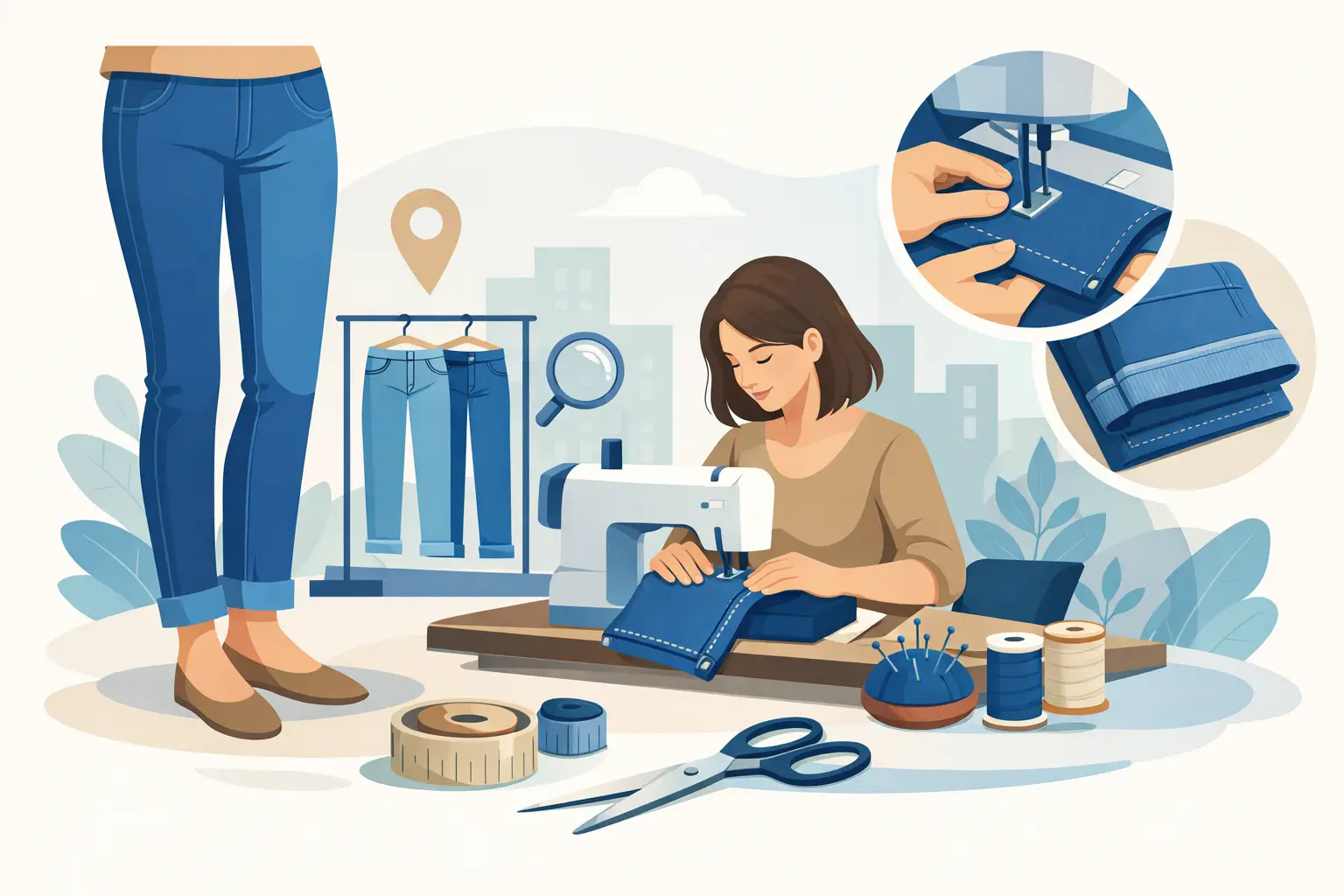
An original hem keeps the existing edge and reattaches it higher up the leg. It is often the preferred option for premium denim with visible fading, abrasion, or distinctive chain-stitch character at the bottom. If you love the authentic worn finish, this method preserves it beautifully.
A new hem can be the better choice when the jeans are crisp, dark, and more refined in appearance. It avoids adding bulk near the bottom and can look cleaner on styles that suit a sharper finish. The trade-off is simple: you gain neatness, but you may lose some of the original visual character. A good tailor will explain that rather than deciding for you.
How to judge a local alterations service
When comparing options for women’s jeans hemming near me, it helps to think beyond speed and price. Denim is an everyday garment, but the right fit works hard in a wardrobe. It deserves the same considered eye you would give to a blazer sleeve or trouser break.
Start with the fitting process. A serious alterations house will ask you to try the jeans on properly, usually with the shoes you expect to wear most often. That matters because a hem for trainers may not work with ankle boots, and a jean intended for heels should be marked differently from one worn flat.
Next, pay attention to the conversation. Are they discussing shape and finish, or only quoting a turnaround time? The best specialists are precise. They will talk about whether the jean should sit on the shoe, skim the ankle, or fall cleanly with little break. They may also point out whether shortening the leg will slightly affect the taper. That is not overcomplication. It is expertise.
Then there is stitching. On denim, thread colour, stitch density, and machine capability all make a difference. Gold contrast topstitching that does not match the original can stand out immediately. So can uneven sewing across thick seam intersections. Premium workmanship is often quiet, but never accidental.
Common hemming mistakes that spoil denim
Most disappointing jeans alterations can be traced to haste. The jeans are pinned too quickly, marked without the right footwear, or hemmed by someone treating denim like standard cotton trousers.
One frequent mistake is removing length without considering width. This matters particularly on tapered and skinny fits, where the lower leg gets broader the higher up you move. Another is ignoring wash and finish. If heavily faded denim is given a stark new hem with mismatched thread, the alteration can look obvious from across the room.
Shrinking expectations also need managing. Some denim, especially if not fully pre-washed, may settle differently after cleaning. That is why an experienced tailor will often ask whether the jeans have already been washed and worn a few times. Hemming brand-new denim before it has relaxed can sometimes lead to surprises later.
There is also the question of bulk. Thick jeans, especially selvedge or rigid denim, require control at the seams. If the hem is poorly executed where layers meet, the bottom edge can twist or sit unevenly. You may not notice it on the hanger, but you certainly will when wearing them.
The value of in-person hemming advice
Searching locally has one clear advantage: fitting in person. Measurements on paper are useful, but denim is about movement and stance as much as numerical length. A good fitter can see whether one leg sits differently, whether the waistband angle changes the drop, or whether your preferred footwear demands a more nuanced hem.
This is particularly valuable for women with recurring fit frustrations. Perhaps jeans fit through the hips but drag at the hem, or one brand works with boots but not with flats. In-person consultation gives room for those details. It turns a routine alteration into a more personalised service, and that tends to produce better wardrobe results over time.
For clients who already appreciate the difference that expert tailoring makes in suiting and formalwear, denim should not be the exception. Precision is precision, whether it is applied to a wedding jacket, a business trouser, or a favourite pair of jeans worn three times a week.
What to expect from a premium hemming service
A premium service is not simply about a nicer shopfront. It is about judgement, consistency, and finishing. You should expect a clear fitting, thoughtful advice on length and finish, accurate marking, and a result that complements the original garment rather than fighting it.
You should also expect honesty. Sometimes the requested length will compromise the shape of the jean. Sometimes preserving the original hem is possible but may create a visible ridge on very light denim. Sometimes the best answer is to adjust expectations by a small margin to protect the line of the leg. The finest alteration specialists do not say yes to everything. They guide you to the strongest outcome.
That is where craftsmanship-led tailoring houses distinguish themselves. Even when the job is relatively modest, the standard remains high because the garment is treated as part of a larger wardrobe – one that should feel polished, intentional, and properly fitted.
If you are evaluating local options, look for a place that values detail over volume. At Manndiip, that philosophy sits at the heart of every fitting: shape first, finish second, speed only after both are properly considered.
The right hem will not shout for attention. It will simply make the jeans fall better, feel better, and earn their place in your wardrobe more decisively every time you put them on.