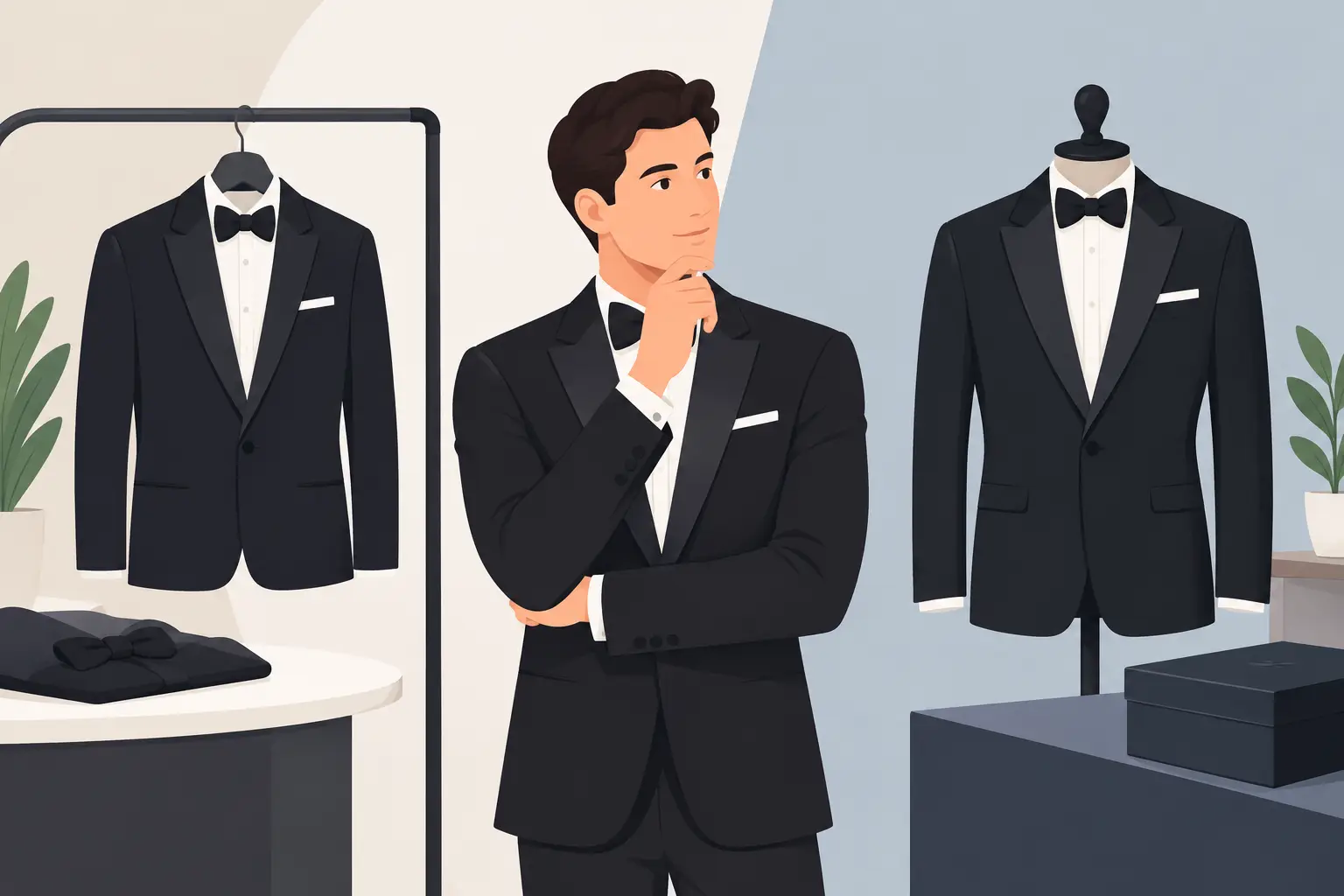
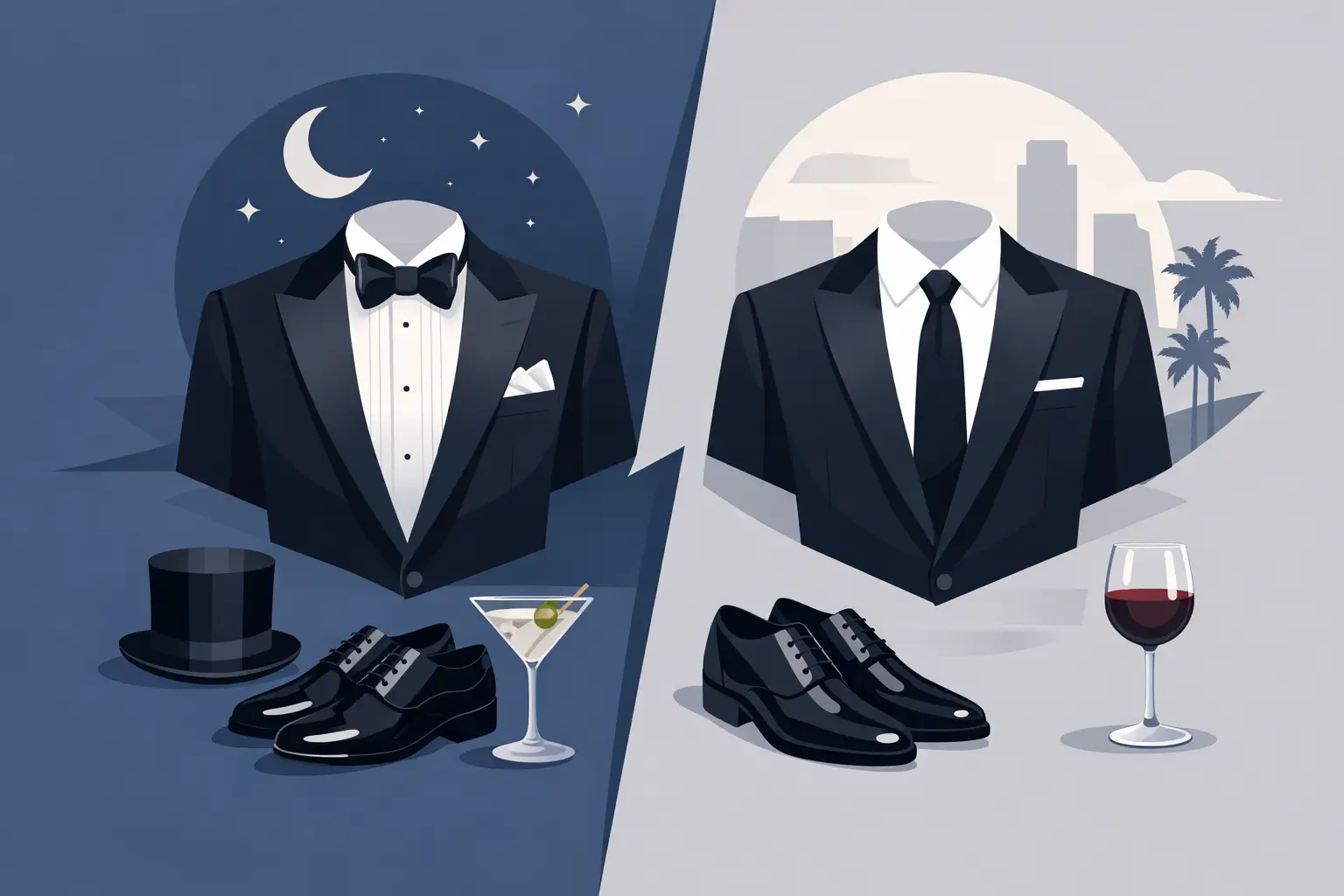
Picture the invitation: black tie, evening ceremony, champagne reception. You know the standard needs to be high, but one question tends to surface quickly – tuxedo vs dinner suit difference: is there actually one, or are people using different words for the same garment? For most men in Britain, the answer is straightforward. A dinner suit is the British term. A tuxedo is the American term. In many cases, they refer to the same piece of formal evening wear.
That said, the confusion is understandable because people often use the words loosely, and retailers do not always help. Some label any dark suit with a satin trim as a tuxedo. Others describe a dinner jacket worn separately as a dinner suit. If you care about dressing correctly, and especially if you are investing in bespoke formalwear, the distinction is less about vocabulary and more about construction, styling, and occasion.
The tuxedo vs dinner suit difference in simple terms
In classic menswear, there is no meaningful garment difference between a tuxedo and a dinner suit. The difference is mainly regional language. In the UK, we say dinner suit. In the US, they say tuxedo. Both describe formal evening wear designed for black tie occasions.
A proper dinner suit will usually feature satin or grosgrain facings on the lapels, matching braid down the trouser side seam, and styling that is cleaner and more formal than an ordinary lounge suit. Traditionally, it is worn with a dress shirt, black bow tie and highly polished shoes.
Where the confusion starts is when men compare a dinner suit with a standard business suit, or when fashion brands blur formal codes for convenience. That is where expertise matters. A true dinner suit is not simply a black suit with a white shirt and bow tie. Its elegance comes from proportion, cloth, finishing and restraint.
What makes a dinner suit distinct from an ordinary suit
The clearest difference lies in the details. Eveningwear has its own language, and it is quieter than many people expect.
Lapel facings and formal finish
The hallmark of a dinner suit is the lapel facing, usually in silk satin or grosgrain. Shawl lapels offer a fluid, elegant line and feel especially refined for evening events. Peak lapels bring a sharper, more architectural look. Notch lapels do appear, but they are generally less formal and less accomplished when the brief is classic black tie.
This facing is not decoration for its own sake. It catches low evening light differently from the main cloth and gives the garment depth. On a well-cut dinner jacket, that contrast looks deliberate rather than flashy.
Trousers are part of the equation
Dinner suit trousers typically carry a satin or grosgrain stripe along the outer leg. They are designed to work as part of a complete formal ensemble, not as stand-alone tailoring. A standard suit trouser does not offer the same finish or visual continuity.
Fit matters here more than many realise. If the trouser line is too slim, the side braid can buckle and distort. Too full, and the entire silhouette loses precision. Eveningwear should feel clean through the leg, with enough shape to drape properly.
Cloth, buttoning and overall restraint
A proper dinner suit cloth is usually darker, cleaner and more formal in character than daytime suiting. Midnight blue remains one of the most elegant choices because under artificial light it can appear richer than black. Black is still entirely correct and often the simplest answer for men buying their first formal suit.
Buttons are usually covered to maintain the smoothness of the front. Vents can vary, though many prefer a ventless back for the most formal reading. Again, this is where tailoring makes a visible difference. Formalwear has to look composed from every angle.
Why people think there is a big difference
Part of the issue is that the word tuxedo has travelled into mainstream fashion culture. It now gets applied to garments that borrow only one or two black tie details. You will see slim black suits marketed as tuxedos simply because they have contrasting lapels. Technically, some are acceptable modern formalwear. Others are just evening-inspired suits.
The British term dinner suit tends to carry a stricter, more traditional meaning. It suggests a complete and correctly styled black tie outfit, not a creative interpretation. For a wedding, gala, awards dinner or formal reception, that distinction matters. You want to look assured, not as though you have approximated the dress code.
When a dinner suit is the right choice
A dinner suit belongs at black tie events and evening occasions where a standard suit would look underdressed. Think formal weddings, winter balls, charity dinners, opera nights and celebrations with a clear sense of ceremony.
It can also be an excellent wedding choice for a groom who wants to look elevated without drifting into costume. A well-made dinner suit has presence, but it does not need gimmicks. The silhouette, lapel shape and finish do the work.
There are moments, however, when a dinner suit is too much. If the event calls for lounge suits, business attire or cocktail dress, formal eveningwear may look out of step. Good dressing is not only about quality. It is also about reading the room correctly.
How the right fit changes everything
Formalwear is unforgiving. Small flaws show quickly because the design itself is so clean. A collar that lifts, a sleeve pitch that twists, or trousers that break too heavily can undermine an otherwise expensive garment.
This is why a dinner suit benefits enormously from bespoke or carefully judged made-to-measure work. The jacket should sit close to the neck, the chest should feel shaped rather than strained, and the waist suppression should flatter without becoming theatrical. Trousers should sit neatly at the waist and fall with uninterrupted line.
For first-time buyers, the temptation is often to focus on surface details – black or midnight blue, shawl or peak, single- or double-breasted. Those choices matter, but fit comes first. If the cut is right, even a restrained design looks distinguished. If the cut is wrong, no amount of satin can rescue it.
Choosing between shawl and peak lapels
This is less about rules and more about the effect you want.
A shawl lapel feels smooth, elegant and particularly refined on men who prefer a softer line. It works beautifully for evening weddings and has a timeless confidence when cut with enough breadth. A peak lapel is slightly more assertive. It broadens the chest visually and can be especially flattering on slimmer builds or men who want more structure.
The decision should also reflect your proportions. Lapel width, gorge height and jacket length need to be considered together. This is where tailored advice earns its keep. Formalwear should frame the wearer, not compete with him.
The accessories that complete the look
If you are wearing a dinner suit, the supporting pieces should uphold the same standard. A proper dress shirt, usually with a marcella or pleated front, keeps the outfit anchored in black tie tradition. A self-tie black bow tie almost always looks more convincing than a pre-tied version. Patent leather shoes are classic, though highly polished formal shoes in the right shape can also work well.
The finer points matter too: shirt studs, cufflinks, braces, and the choice of pocket square. None should feel overworked. The goal is controlled sophistication. Evening dress is at its best when every element appears considered, but nothing shouts.
So, should you say tuxedo or dinner suit?
If you are in Britain, dinner suit is the more natural and accurate term. It signals that you understand the garment in its proper context. Tuxedo is not wrong, particularly if you are speaking with international clients, reading global fashion coverage or shopping across different markets. But for a British audience, dinner suit sounds more assured.
That is perhaps the real point behind the tuxedo vs dinner suit difference. The words matter less than whether the garment is cut correctly, styled appropriately and worn with confidence. Formalwear rewards precision. It asks for discipline in the details and gives back a kind of authority that ordinary suiting rarely matches.
If you are commissioning one, treat it as a long-term part of your wardrobe rather than a one-evening purchase. The right dinner suit will serve you for years, and each time you wear it, it should feel less like dressing up and more like stepping fully into the occasion.