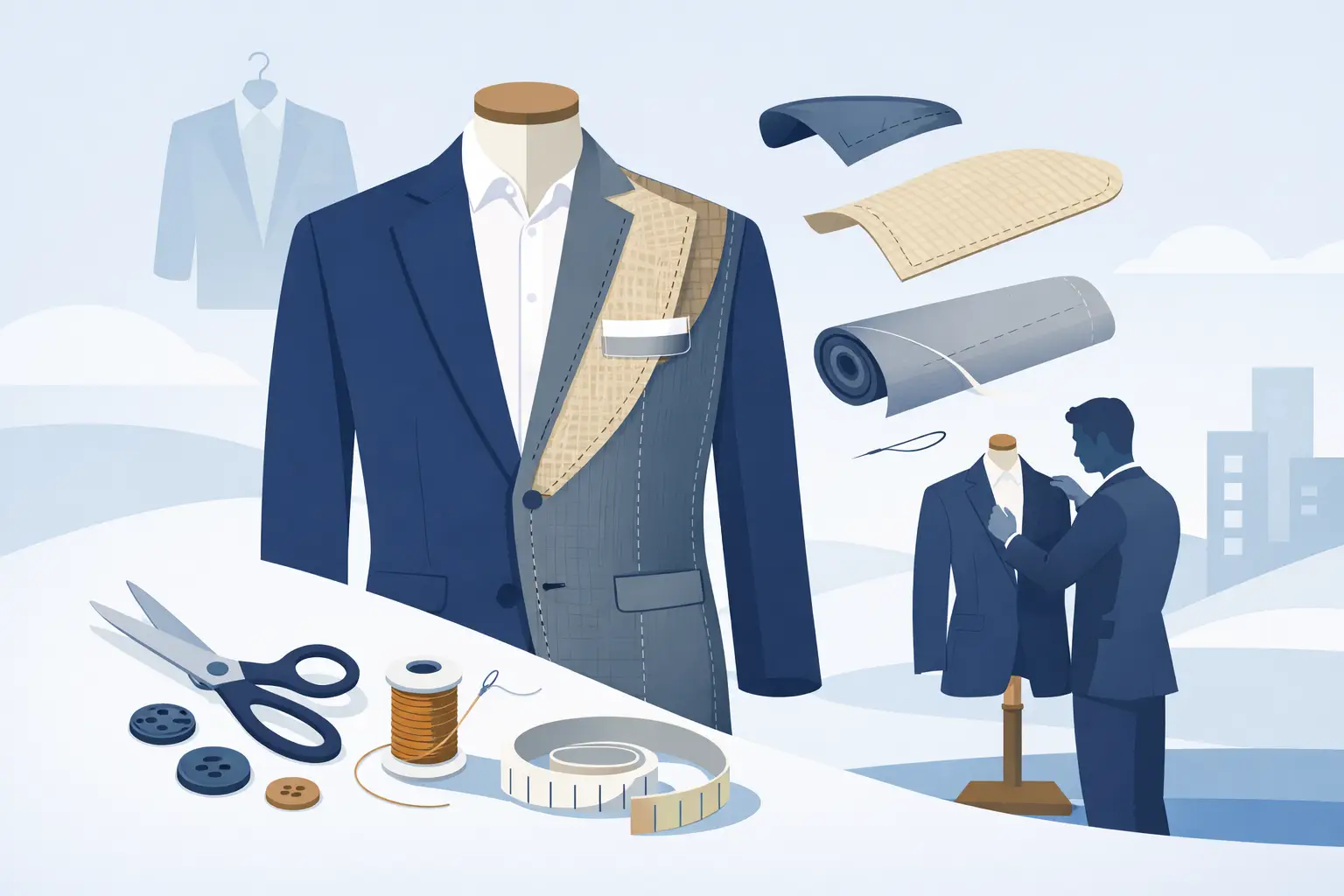
A suit can look impressive on the hanger and still disappoint the moment you put it on. The reason is often hidden beneath the cloth. Any worthwhile guide to suit canvassing construction starts there, because canvassing is what gives a jacket its shape, drape and life over time.
For a man investing in tailored clothing, this is not a minor technical detail. It affects how the chest sits, how the lapel rolls, how the jacket moves with the body and how well it holds its composure after years of wear. If cloth is the face of the suit, canvassing is its architecture.
What suit canvassing construction actually means
Canvassing refers to the internal layer built between the outer fabric and the lining of a jacket. Traditionally made from materials such as wool, horsehair, cotton or a blend, this internal structure gives the coat front resilience and form without making it feel rigid. It supports the chest, shapes the lapel and helps the jacket settle cleanly against the body.
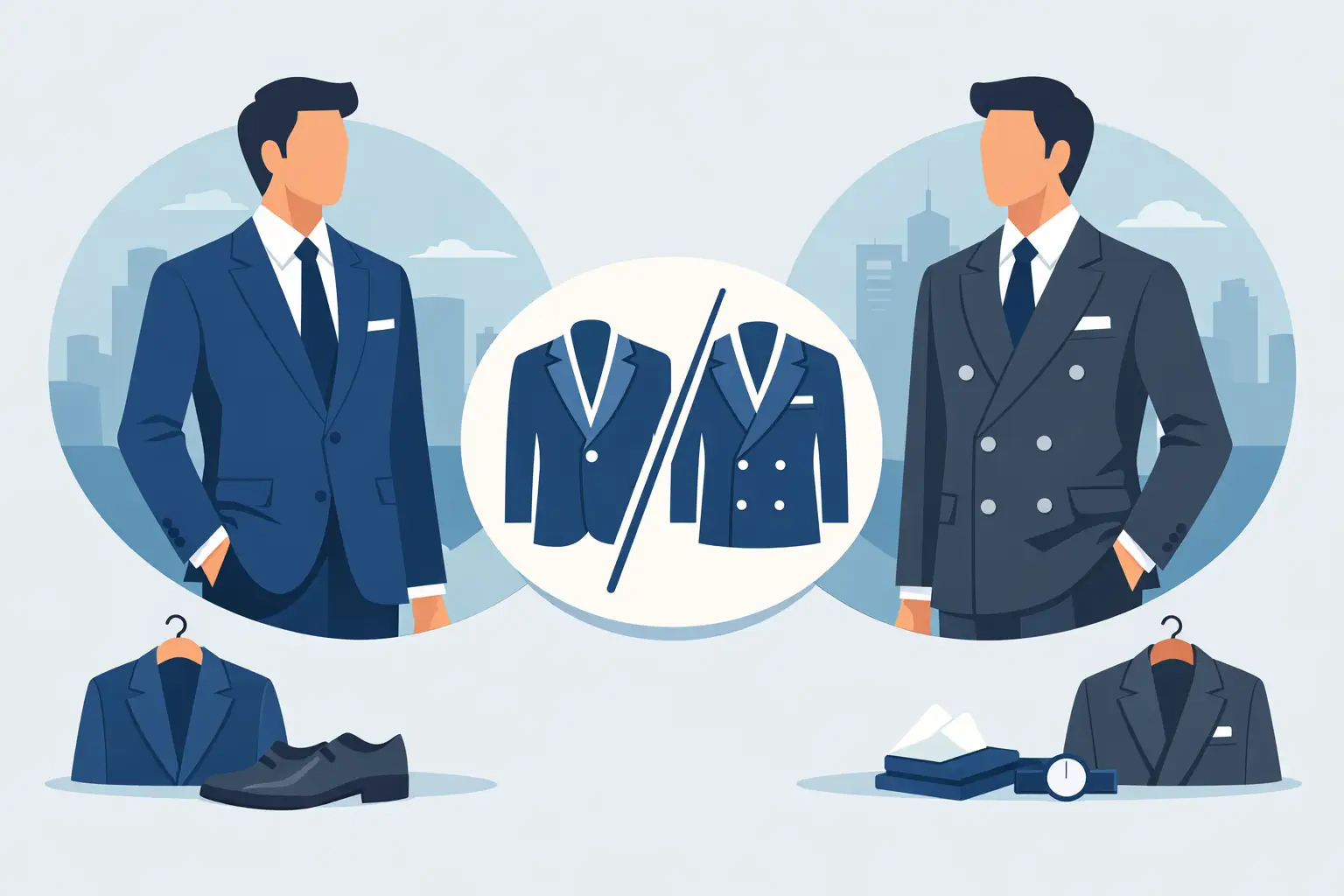
When people speak about a jacket being full canvas, half canvas or fused, they are describing how that internal structure has been made. From the outside, the difference may be subtle at first glance. On the body, and especially over time, it becomes far more obvious.
This is why canvassing matters so much in bespoke and custom tailoring. A well-cut suit should not merely fit your measurements. It should flatter your posture, follow your natural lines and improve with wear. That requires more than a decent pattern and good cloth. It requires the right internal build.
A practical guide to suit canvassing construction types
Full canvas
A full canvas jacket has a floating canvas running through the full front of the coat, generally from the shoulder through the chest and down to the hem. Because the canvas is not glued directly to the outer cloth, it can move with the fabric and with the wearer.
This is widely considered the finest method of jacket construction, and for good reason. A full canvas chest has a natural, sculpted quality that is difficult to imitate. The lapel tends to roll more elegantly, the front hangs more cleanly and the jacket gradually moulds to the wearer’s frame.
That said, full canvas is not automatically the right choice for every man or every purpose. It usually costs more, takes more work and may feel more substantial than some clients want, especially if they are after an ultra-light summer suit or a less structured silhouette.
Half canvas
Half canvas construction uses a floating canvas through the upper portion of the jacket, typically across the chest and lapel area, while the lower front relies more on fusing. In practical terms, this gives many of the benefits of canvassing where they matter most, while keeping cost and weight more moderate.
For many wardrobes, half canvas is an intelligent middle ground. The chest retains shape, the lapel behaves properly and the jacket usually drapes with more refinement than a fully fused equivalent. If you want a suit for business use, regular occasions or travel, half canvas often offers an excellent balance of elegance, performance and value.
Fused construction
In a fused jacket, interlining is bonded to the cloth with adhesive rather than floating freely. This is the quickest and least expensive way to build a suit, which is why it is so common in mass-market tailoring.
A fused jacket is not always a disaster. Modern manufacturing has improved, and some fused garments can look tidy when new. But this method rarely delivers the same softness, dimensional chest shape or long-term resilience as canvas construction. Over time, repeated wear, pressing and moisture can cause bubbling or separation in poorer-quality fused jackets.
For a client who values sartorial sophistication, this is where the difference between buying a suit and commissioning one becomes very clear.
Why canvassing changes the way a suit fits
Most men think of fit in simple terms – shoulders, sleeve length, trouser break. Those matter, of course, but canvassing affects a deeper level of fit. It influences how the jacket lives on the body.
A canvassed chest has spring. It supports the cloth so the jacket does not collapse flatly against the torso. This creates a cleaner line from shoulder to waist and gives the front of the coat a more composed, masculine shape. On a man with a prominent chest, rounded back or slightly uneven posture, proper canvassing can help the jacket sit more harmoniously instead of exaggerating imbalances.
This is one of the quiet advantages of bespoke tailoring. Construction can be adjusted alongside the pattern, rather than treating every body as though it were identical. The result is not merely accuracy by tape measure, but visual balance.
Drape, comfort and movement
A beautifully tailored jacket should feel present, not restrictive. Good canvassing helps achieve that balance. Because a floating canvas works with the outer cloth rather than pinning it stiffly in place, the jacket tends to move more naturally through the chest and lapel.
You notice this when you sit, reach, walk or spend a full day in the garment. A canvassed suit usually settles back into shape more gracefully. It has a certain poise to it, the kind that distinguishes true tailoring from clothing that simply mimics the look.
There is also a comfort argument. Natural fibres used in quality canvas can breathe better than heavily glued constructions, which matters if you wear tailoring through long working days, weddings or evening functions. A suit should hold its line without feeling like armour.
How to tell what construction a suit has
A reliable tailor or maker should tell you plainly, but there are a few clues worth knowing. The pinch test is often mentioned: if you gently pinch the jacket front between the outer cloth and the inner layer around the chest, you may feel whether a separate floating canvas is present. This can help, though it is not foolproof.
A better indicator is the behaviour of the lapel and chest. A canvassed jacket tends to have a more natural lapel roll rather than a flat, pressed-looking fold. The chest often appears fuller and more three-dimensional. In lower-grade fused jackets, the front can look a touch lifeless, almost too flat and uniform.
Still, appearances can mislead. The safest route is to ask direct questions about construction and to buy from specialists who are as confident discussing internals as they are discussing cloth.
Which canvassing construction is right for you?
This depends on how you wear your tailoring and what you expect from it. If you are commissioning a wedding suit, a cornerstone business suit or a piece intended to anchor your wardrobe for years, full canvas is often worth serious consideration. It offers the most refined silhouette and tends to age best.
If you are building a wardrobe thoughtfully and want strong performance without moving to the very top end on every garment, half canvas is frequently the smart choice. It provides much of the chest and lapel benefit that discerning clients care about, while remaining versatile and cost-conscious in relative terms.
If budget is the only priority and the suit is for occasional use, fused construction may be acceptable. But it is rarely the option for a man who sees clothing as an extension of identity and presence. When fit, polish and longevity matter, internal construction should never be an afterthought.
The role of canvassing in bespoke value
Much of the value in bespoke lies in what cannot be seen immediately. Hand-finishing, pattern correction, balance adjustments and canvassing all contribute to a garment that feels more intuitive on the body. This is why a well-made suit often appears quietly superior rather than loudly different.
The jacket does not fight your stance. The lapels frame the shirt and tie with ease. The front remains elegant after repeated wear. These qualities are not accidental. They are built in.
At Manndiip, that level of precision is part of the broader tailoring philosophy: garments should be meticulously crafted not only to fit a frame, but to express a man’s standards. Construction is central to that promise.
Guide to suit canvassing construction for long-term wear
If you wear suits regularly, think beyond the first fitting. Ask how the jacket will perform after commuting, sitting through meetings, attending events and returning to the press repeatedly. A cheaper construction can appear acceptable in the short term and reveal its compromises later.
A proper canvassed jacket tends to repay patience. It develops character with wear, softens where it should and retains authority where it must. That is especially valuable in business wardrobes, formal dressing and occasion wear, where the suit is expected to communicate confidence before a word is spoken.
The finest tailoring is rarely about excess. It is about judgement. Choosing the right canvassing construction is part of that judgement – a decision that shapes not only how a suit looks, but how it accompanies you through the moments that matter most. When a jacket is built well beneath the surface, you feel the difference every time you button it.